Understanding the Summer Surge and Its Lasting Impact
Why animal intake peaks during summer months
Every shelter director knows the pattern. Summer arrives, temperatures climb, and suddenly the phones don’t stop ringing. The intake numbers spike dramatically, often doubling or tripling what facilities see during winter months. But this isn’t random chaos. There’s a predictable cycle driving it, and understanding the mechanics helps explain why fall becomes so devastating.
Breeding season is the primary culprit. Animals born in spring reach maturity by early summer, and unspayed or unneutered pets produce litters at staggering rates. A single unaltered cat can produce 12 kittens per year.
A dog might have 6 to 12 puppies in a single litter. When these animals hit shelters, they compound capacity issues instantly. Multiply that across hundreds of litters across a region, and you’re looking at thousands of animals needing immediate care and placement.
Weather also plays a role. Abandoned animals, strays, and outdoor pets roaming neighborhoods are far easier to spot during warm months. Good weather means more foot traffic, more people outside, more encounters with animals in distress. Summer also brings increased owner surrenders driven by vacation conflicts, moves, and lifestyle changes people put off during colder seasons.
Then there’s the holiday effect. As summer progresses toward Labor Day and beyond, families travel more frequently. Pets get left behind, dropped at shelters by owners who couldn’t arrange care. Landlords enforce no-pet policies more aggressively. Domestic situations destabilize. All of this flows directly into shelter doors when they’re already overwhelmed.
How seasonal rescue operations strain year-round resources
Shelters staff up as best they can, but the summer surge creates a false sense of capacity. Budget committees approve extra staff, volunteers mobilize, and donation drives run at higher levels. But here’s the trap: those extra resources are temporary.
The funding is summer-specific. The volunteers burn out from the intensity. The infrastructure doesn’t actually expand permanently.
It stretches thin and holds.
Medical resources get depleted fast. Spay and neuter surgeries triple. Vaccine stocks deplete. Behavioral assessments pile up because staff can’t keep pace. Foster networks get saturated. Transport partners reach capacity. Every single resource that shelters rely on operates at maximum burn rate simultaneously, with no buffer built in.
Staffing becomes especially fragile. Kennel workers, veterinarians, behavioral specialists, and intake coordinators work extended shifts, weekends, and holidays. Burnout accelerates rapidly.
People make mistakes when exhausted. Quality of care suffers not from neglect but from sheer volume. Understanding trauma-informed approaches to animal handling becomes nearly impossible when staff are running on fumes and each shift feels like triage, not care.
The financial impact is brutal. Emergency medical bills spike. Feeding costs increase. Utilities run higher. Supply chains get strained. Donations peak during summer (people are more generous when weather is nice and visibility is high), but so do expenses. The math rarely works out. Many shelters end summer with depleted reserves instead of surpluses, despite increased fundraising.
The ripple effect: carrying debt and fatigue into fall
September hits differently when you’ve already run a marathon through August. The animals don’t stop arriving. The public doesn’t suddenly decide shelter animals are less worthy of rescue.
But the donation pipeline slows. Media attention shifts. Volunteer momentum fades.
Meanwhile, the facility is still holding 30% more animals than it did in June, with exhausted staff, depleted medical supplies, and drained budgets.
Staff turnover accelerates in fall. People who survived summer on adrenaline realize they’re finished. They leave for other jobs, less intense positions, career changes entirely. That institutional knowledge walks out the door. Training new hires becomes impossible when current staff are already understaffed. This creates a vicious cycle that extends into winter and beyond.
Financial debt carries forward. Shelters that used credit lines or emergency reserves during summer enter fall in precarious positions. They need emergency animal donations not as bonuses but as survival requirements. Yet funding becomes harder to secure just when need peaks. This is precisely why understanding why we focus matters so much during these transition months.
The animals themselves carry the summer’s trauma forward. Those held in overcrowded conditions develop behavioral issues. Shelter stress manifests as aggression, anxiety, and fear. By the time adopters arrive in fall, many animals have already been institutionalized by the experience. Rehabilitation becomes necessary before placement becomes possible.
This is the reality shelters face every single year. Summer’s abundance masks structural fragility. Fall reveals what was always true: the system runs on fumes, goodwill, and the dedication of people who care far more than compensation justifies.
Capacity Crisis: When Shelters Hit Their Breaking Point
Recognizing signs of overcrowding and burnout
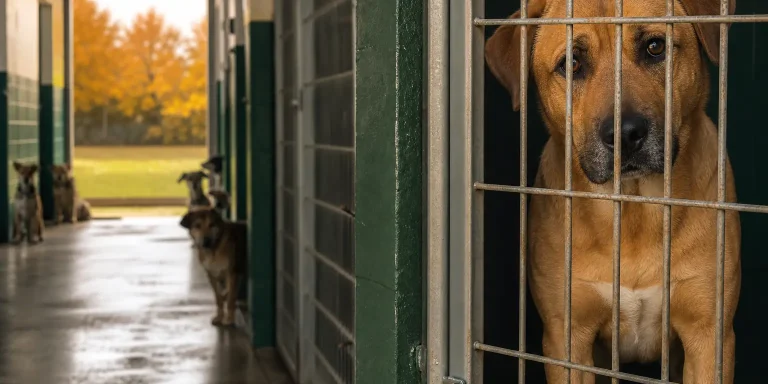
By late August and early September, most shelters operating at full capacity start showing unmistakable signs of strain. The warning indicators arrive gradually at first, then all at once. You’ll notice kennels that were designed for single animals now housing two or three.
Food consumption spikes unpredictably. Cleaning schedules slip because there simply aren’t enough hands to maintain sanitation standards that prevent disease spread.
But the physical crowding is only half the story. Staff members begin arriving earlier and staying later, skipping their scheduled breaks. Volunteers who once worked predictable shifts start fielding emergency texts asking if they can come in on their days off.
The energy in the shelter shifts from purposeful to panicked. People move faster but accomplish less. Tensions rise between departments that are all competing for the same limited resources.
What started as a crisis mentality (which can actually fuel productivity for short bursts) transforms into something darker: resignation.
One shelter director described it as “watching the lights dim in people’s eyes.” That’s when you know capacity has crossed from “challenging” to “dangerous.” Animals stop getting adequate socialization because staff are focused entirely on survival tasks. Behavioral assessments become rushed. The intake process, normally careful and methodical, turns into triage mode. And importantly, when staff morale craters, so does the quality of care that every animal deserves.
Medical and behavioral complications from overpopulation
Overcrowded shelters create a perfect storm for disease transmission. Upper respiratory infections spread through kennels faster than staff can isolate affected animals. Parasites thrive in conditions where sanitation falls behind demand.
Stress-related illnesses emerge in animals who were healthy upon arrival but deteriorate under the anxiety of close confinement. A shelter operating at 150% capacity isn’t just uncomfortable for its residents; it becomes a pressure cooker where treatable conditions become life-threatening.
Behavioral problems multiply exponentially in overstressed environments. Fearful dogs become aggressive when caged next to unfamiliar animals day after day. Cats develop inappropriate elimination behaviors from litter boxes that can’t be maintained properly. Aggression that might have been manageable in a lower-stress setting becomes the reason a perfectly adoptable animal gets labeled as “unsuitable for placement.” These aren’t character flaws in the animals; they’re direct responses to impossible living conditions.
The cascade of complications also hits adoption outcomes. An anxious dog that spent three months in a crowded shelter develops worse behavioral issues than one who was in care for three weeks in less chaotic conditions. Adopters bring animals back, further overwhelming intake. Meanwhile, the shelter struggles to provide resources necessary, meaning preventable returns become inevitable. Medical complications like the serious infections documented in cases such as eye surgery become more frequent when basic sanitation standards slip.
Making difficult triage decisions with limited space
When shelters hit capacity crisis mode, they face decisions that haunt leadership long afterward. Which animals get available medical treatment? Which get housed in better conditions? Which intake requests can actually be accepted versus which must be refused? These aren’t abstract ethical dilemmas; they’re immediate, daily decisions affecting individual animals’ lives.
Some facilities implement formal triage protocols: animals showing medical urgency move to limited isolation spaces. Young, healthy, behaviorally sound animals get prioritized for adoption activities because they’re most likely to find homes quickly and free space. Older animals or those with behavioral challenges face longer waits. It’s utilitarian calculus applied to living beings, and it weights heavily on everyone involved.
The financial strain compounds these decisions. Urgent medical cases require funds that weren’t budgeted. Implementing emergency response protocols becomes essential for survival. Without external support, shelters sometimes cannot afford the very interventions that would free up space (like treating a treatable illness so an animal can be safely released to rescue partners). This is where external partnerships and community support become literally life-saving rather than simply helpful.
The reality is this: capacity crisis mode forces shelters to operate in direct contradiction to their core mission. They’re designed to be sanctuaries, but overcrowding transforms them into something closer to warehouses. Recognizing these breaking points early, and mobilizing support accordingly, is the difference between systems that bend under pressure and systems that break.
Staffing and Volunteer Burnout in the Fall Transition
How summer intensity depletes team morale and availability
By August, shelter staff are running on fumes. The relentless pace of summer intake, medical emergencies, and behavioral assessments takes a physical and emotional toll that most people outside the animal welfare world don’t fully understand. Staff members who started June with enthusiasm find themselves exhausted by fall, and that’s when things get worse, not better.
The problem isn’t just long hours, though those exist. It’s the emotional weight of making impossible decisions day after day. A shelter coordinator might spend eight hours managing intake, then face a heartbreaking choice about which animals can stay in the facility and which need immediate placement to free space.
That decision haunts people. When summer demand surges, these moments happen constantly, and the cumulative effect chips away at morale faster than anyone expects.
Availability suffers too. Staff members who’ve been working six-day weeks since May start calling in sick more frequently by September. Some use vacation time they’ve been postponing, which further thins the team right when capacity problems intensify.
Others simply stop showing up. The turnover rate in animal shelters spikes in fall specifically because experienced workers have reached their breaking point. You lose institutional knowledge and training capacity precisely when you need it most.
Burnout isn’t just about feeling tired. It manifests as reduced decision-making quality, higher error rates in medical care documentation, and staff conflict that spreads through the organization like infection. A traumatized team becomes less effective at managing the very crisis that traumatized them.
Retaining experienced staff through post-crisis periods
The shelters that successfully retain staff after summer surges do something counterintuitive: they invest heavily in recovery, not punishment. This means mandatory time off, access to mental health resources, and clear communication about what comes next.
Experienced staff members are irreplaceable assets, and smart shelter leadership understands this. A veterinarian with five years at your facility knows how to triage animals faster than anyone else. A behaviorist who’s worked through previous summers knows which dogs will decompress with time versus which need specialized intervention. Losing these people compounds every future crisis.
Retention starts with acknowledgment. Staff need to hear that their work during the surge mattered and that the organization recognizes the cost. Some shelters implement “crisis aftermath protocols” that include reduced hours, flexible scheduling, or rotating teams so nobody works more than four consecutive weeks during peak season.
This isn’t soft leadership. It’s operational strategy. A staff member who knows they’ll have recovery time is more likely to push hard when the crisis demands it.
Building systems like corporate partnerships also helps by bringing external support during peak periods. When corporate volunteers arrive to handle administrative tasks, your core staff can focus on animal care instead of drowning in logistics.
Compensation matters too, though many shelter budgets are already broken. Even small bonuses for staff who stay through peak season send a message that the organization values their sacrifice.
Building sustainable volunteer programs that survive peak seasons
Shelters with strong volunteer programs handle September crises better than those relying solely on paid staff. But volunteer programs don’t magically appear when you need them. They require year-round cultivation.
The most effective approach uses tiered volunteer structures. Some volunteers commit to regular weekly shifts year-round. Others are “surge volunteers” who understand they’ll be activated during summer and early fall. A third group handles specialized tasks like fostering, which reduces shelter strain without requiring facility hours.
Sustainability means training volunteers before you need them desperately. Many shelters make the mistake of rushing people through orientation during crisis weeks, which leads to errors, frustrated volunteers, and burnout from both staff and volunteers. Build your volunteer bench during calm months.
Run training sessions in April and May. Vet people thoroughly. Then during summer surge, you activate a prepared team rather than scrambling to recruit warm bodies.
Retention of volunteers follows similar principles as staff retention. Thank them specifically. Give them roles that match their skills (the accountant doesn’t need to clean kennels; use that person for donor database work). Communicate honestly about what’s happening during crisis periods so they understand why things feel chaotic.
Shelters that connect volunteers to the outcomes of their work see better retention. Someone who spent two months helping rehabilitate an animal and then sees that animal adopted feels the impact of their time. Share these stories. Highlight how volunteer effort directly prevents animal suffering during overcrowded periods.
Financial Strain: Budgets and Emergency Spending
Unexpected costs that emerge from summer rescue operations
When shelters pull animals from neglect situations during the summer months, they inherit a cascade of medical expenses that weren’t budgeted for in annual planning. A dog rescued from severe matting might need three rounds of sedated grooming, antibiotics for skin infections, and dental work. A cat pulled from a hoarding situation arrives with upper respiratory infection, ear mites, and behavioral issues requiring specialized handling. These aren’t line-item expenses that show up in spreadsheets until the invoice arrives.
Emergency veterinary care sits at the top of the unexpected cost list. Shelters operating on tight budgets account for routine spays, neuters, and vaccines. What they don’t account for is the surge dog who needs $3,000 in orthopedic surgery, or the kitten whose URI turns into pneumonia requiring hospitalization.
Summer rescues often involve animals in crisis, and crisis medicine is expensive. A single emergency blood transfusion or intensive care admission can consume thousands of dollars from a monthly operational budget that was already allocated elsewhere.
Behavioral rehabilitation and trauma-informed care add another layer of financial pressure. Animals rescued from abuse or neglect frequently need professional trainers, extra staff time, and extended holding periods before they’re adoptable. The detailed journey of bella’s rehabilitation journey shows exactly how resource-intensive this work becomes. What rescue staff thought would be a two-week intake process stretches into months of specialized care, doubling or tripling the per-animal cost to the shelter.
Forecasting and planning for fall operational needs
Shelters that survived previous September crises learn an uncomfortable truth: you can’t predict demand with the precision that traditional budgeting requires. A shelter director might look at last year’s numbers and think they’ve got a clear picture of fall intake. Then a hoarding case involving 47 cats arrives overnight, or a surrender surge hits when people realize their summer puppies aren’t working out, and every forecast becomes obsolete.
The challenge compounds because summer’s impact lingers directly into fall. Medical expenses from July and August rescues don’t stop accruing in September. A dog still recovering from heartworm treatment continues pulling resources from the current budget. Supply chains that worked in June sometimes falter by October, forcing shelters to pay premium pricing for food, bedding, and medications they can’t procure at normal rates.
Progressive shelters now build contingency reserves into their operational planning, though this remains a luxury many can’t afford. Larger organizations might earmark 15-20% of their annual budget as emergency reserves. Smaller rescues operating with virtually no buffer have zero flexibility. When the inevitable happens, they face stark choices: delay necessary surgeries, reduce staff hours, cut services, or launch emergency fundraising during the exact moment when donations are hardest to secure.
Funding gaps and community support strategies
The fundamental problem isn’t complicated: summer creates surges that autumn budgets can’t absorb. Donor fatigue sets in after months of shelter appeals. Corporate partners who contributed during the warm months shift their charitable giving toward end-of-year causes. Traditional fundraising calendars don’t align with when shelters most need resources.
Organizations are increasingly turning to specialized emergency funding approaches. Rather than waiting for annual galas or quarterly campaigns, proactive shelters build relationships with emergency donors who understand that crisis support comes on unpredictable schedules. Exploring emergency response funding reveals how targeted support systems help bridge these gaps before they become catastrophic.
Community networks matter tremendously. Shelters that communicate transparently about their financial constraints find support from unexpected places. Local businesses adopt “shelter support” programs. Corporate partnerships structured for large scale animal provide consistent backing. Foster networks expand, reducing housing costs. Volunteer coordinators recruit specialized talent—veterinarians, behaviorists, skilled foster parents—who donate expertise rather than just time.
Sustaining these networks requires consistent communication and genuine transparency. Shelters that hide their budget crises until they’re critical lose community trust. Those that proactively share their challenges, explain how funds will be used, and celebrate outcomes when support arrives build lasting partnerships.
The animals arriving at shelter doors in September need more than temporary generosity. They need communities committed to understanding the full cost of rescue.
Strategic Solutions for Fall Preparedness
Early warning systems and intake prediction models
The difference between controlled chaos and complete collapse often comes down to one thing: seeing the crisis coming before it arrives. Shelters that implement early warning systems don’t just react to surges, they prepare for them with surgical precision.
Data-driven intake prediction models work by analyzing historical patterns. If a shelter knows that August typically brings a 40% spike in summer-weaned litters, or that September relinquishments jump when families return to school routines, they can staff accordingly, arrange emergency foster networks, and secure additional medical supplies before the phones start ringing off the hook. These aren’t guesses. They’re numbers pulled from years of intake records, seasonal trends, and community patterns specific to each region.
The mechanics are straightforward: track daily intake numbers, categorize by animal type and condition, note seasonal fluctuations, and build predictive models around that data. When projections show intake will exceed current capacity by 30%, that’s the signal to activate contingency plans. Deploy extra staff.
Open additional holding areas. Launch emergency appeals for emergency animal donations before resources actually dry up. This proactive approach prevents the desperate scramble we see in unprepared facilities.
Some shelters use software platforms designed specifically for this. Others use basic spreadsheet analysis. The tool matters less than the commitment to looking ahead rather than perpetually looking back at what went wrong.
Collaborative rescue networks and regional partnerships
No shelter survives peak season alone. The ones that come through intact are those that built coalitions long before September pressure hits.
Regional partnerships distribute burden across multiple organizations. When one facility maxes out, animals transfer to partner rescues with capacity. Foster networks expand across jurisdictions.
Volunteers from one group pitch in at another during critical periods. Medical resources get shared (one shelter’s surgery suite becomes available to partners during non-peak hours). This isn’t charity.
It’s mutual survival.
Consider how building corporate partnerships creates infrastructure for the entire rescue community, not just one organization. When corporate sponsors commit funding to a coalition, that money flows to whichever member organization needs it most at any given moment. When transport logistics get arranged at scale, all partners benefit from reduced per-animal costs.
Effective networks have clear agreements in writing. Who takes what animals? How do transfers happen? Who covers medical costs? What communication protocols exist when a partner facility hits capacity? Without these agreements, partnerships collapse the moment actual crisis pressure arrives.
Some regions have formalized networks with governance structures and shared funding mechanisms. Others operate as informal coalitions built on personal relationships and trust. Both work, provided the relationships are active and the communication channels stay open year-round (not just when emergency strikes).
Creating adaptable shelter protocols for crisis management
Rigid protocols break under strain. Adaptable ones bend and flex while maintaining core safety standards.
Crisis protocols should specify exactly what changes when capacity reaches certain thresholds. At 80% occupancy, what adjusts? At 95%?
These aren’t hypotheticals. They’re decision points written out beforehand so leadership doesn’t improvise under pressure. Maybe intake restrictions kick in at 90%.
Maybe medical staff shifts to emergency-only surgeries, postponing routine spays and neuters. Maybe temporary housing activates in auxiliary spaces.
Staff needs clear, written guidance on trauma-informed handling during high-stress periods. Animals arriving during surges are often already traumatized. Burned-out staff can accidentally compound that trauma through rushed handling or shortened socialization windows. Adaptable protocols build in safeguards: mandatory breaks, rotation schedules, peer support check-ins, and simplified enrichment activities that still provide care without demanding full capacity effort.
Think of these protocols as living documents. They should be tested annually, revised after each crisis, and practiced during normal months so staff actually knows what to do when panic sets in. A trauma-informed approach during protects both animals and the humans caring for them.
Preparation prevents disaster. When shelters invest in early warning systems, build genuine coalitions, and develop adaptable protocols beforehand, September doesn’t feel like catastrophe. It feels like a predictable surge they’ve already trained for.
Supporting Shelters Through the Crisis Cycle
How communities can strengthen local rescue capacity
Building resilient rescue infrastructure isn’t something that happens by accident. It requires intentional collaboration between shelters, rescue organizations, veterinary clinics, and concerned community members who understand that September’s crisis isn’t inevitable, it’s preventable.
The most effective communities treat animal rescue as a shared responsibility. When local vets dedicate specific hours to low-cost emergency care, when foster networks expand beyond their typical volunteer base, and when shelters openly communicate about their capacity limits, the entire system becomes more elastic. Some regions have created coalition structures where three to five rescue organizations meet monthly to share intake data, coordinate medical resources, and identify gaps before crisis strikes.
Corporate partnerships matter more than many people realize. Local pet supply stores, grooming facilities, and even construction companies have stepped in to provide supplies, space, or financial support during peak seasons. Building corporate partnerships creates a safety net that keeps organizations functional even when individual donations fluctuate.
Community education changes behavior too. When neighborhoods understand the cycle that shelters face, they’re more likely to adopt before summer peaks, report stray animals safely, and advocate for spay/neuter programs that reduce intake volumes. This isn’t about guilt. It’s about creating informed communities that actively participate in solutions.
Resources for shelters managing ongoing crisis situations
Shelters in crisis need access to real, practical resources, not just encouragement. That means funding that arrives when it’s needed, training in trauma-informed handling of both animals and staff, and technical support for the systems that keep operations running.
Financial resources must be flexible and responsive. When a shelter faces August-through-October overwhelm, they need funding mechanisms that don’t require months of application processing. Emergency response protocols exist specifically to address this gap, ensuring that critical care expenses don’t go unpaid because budgets were stretched too thin in July.
Shelter staff also need access to peer support networks and burnout prevention training. Organizations like Without Voices recognize that preventing staff collapse is as important as medical care. Some shelters have begun implementing trauma-informed protocols that help teams process what they’re experiencing while still delivering excellent care to animals.
Physical resources matter equally. Supplies running low in September means some animals go without adequate bedding, food, or enrichment. Strategic initiatives like the winter food supply show how coordinated resource collection can bridge seasonal gaps, ensuring shelters don’t face shortages that compromise animal welfare.
Long-term planning to prevent annual overwhelm
The real solution lies in planning that starts in January, not September. Shelters need to model their intake patterns, calculate capacity limits based on actual staffing (not optimistic projections), and build financial reserves specifically for predictable seasonal peaks.
Data-driven forecasting allows shelters to anticipate needs. If a facility knows from five years of records that intake jumps 40% between July and September, staffing decisions, supply orders, and fundraising campaigns should reflect that reality. Too many organizations wait until they’re drowning to acknowledge the pattern.
Building sustainable funding models prevents the “crisis bounce” where shelters barely recover before the next peak hits. A shelter relying entirely on reactive emergency donations will struggle perpetually. By contrast, organizations that secure ongoing partnerships with community foundations, corporate sponsors, and individual major donors can absorb seasonal fluctuations without operational collapse.
Volunteer retention also depends on planning. If your core team knows that September brings structured support (cross-training, additional volunteers, clear protocols), burnout decreases significantly. This requires year-round recruitment and relationship-building, not last-minute scrambling.
The animals in your community deserve a rescue system that operates sustainably, where staff doesn’t burn out and animals don’t suffer because resources evaporated. Building that system takes commitment from everyone involved. Whether you’re a shelter director, a volunteer, a donor, or someone who cares about animal welfare, your involvement matters.
Support your local shelters now, help strengthen their capacity during calm months, and recognize that emergency animal donations save lives, especially when crisis cycles are predictable and preventable. The September surge doesn’t have to be a crisis at all.
Related Posts
- A Small Dog Named Tiny Needs Emergency Help
- Tiny Receives Treatment at Hillcrest Veterinary Hospital
- Tiny Finds Her Forever Home
- Building Corporate Partnerships for Large Scale Animal Emergency Relief Operations
- Emergency Response Protocols When Animal Rescue Donations Are Critically Needed
- Help Save This Brave Little Puppy – Urgent Eye Surgery Needed
- Why We Focus on Emergency Response Funding for Animals in Crisis