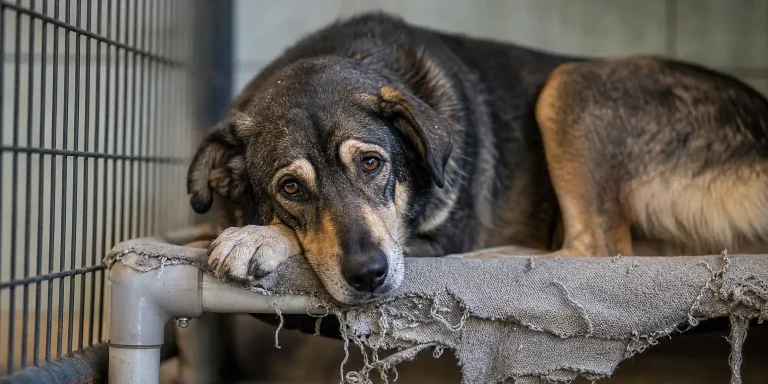
Understanding the Psychological Impact of Trauma in Rescued Animals
When a rescue animal arrives at a shelter or foster home, the physical wounds are often the first thing people notice. Malnutrition. Untreated infections. Injuries that demand immediate veterinary attention. But there’s something far more pervasive happening beneath the surface, something that takes months (sometimes years) to truly heal: the psychological damage of trauma.
Most rescue professionals understand that food, water, and medical care are table stakes. Without them, an animal won’t survive. But survival isn’t the same as recovery.
And if your organization focuses exclusively on the physical needs while ignoring the emotional and behavioral fallout, you’re setting these animals up for failure during adoption and beyond. A traumatized animal with a full belly and a clean bill of health can still be a biting, cowering, or aggressive liability in a home if nobody addressed what happened to them.
This is where behavioral rehabilitation becomes non-negotiable. It’s the bridge between rescue and actual recovery, between temporary placement and lasting placement. Understanding the psychological impact of trauma isn’t just compassionate; it’s practical animal welfare strategy that saves placements, prevents returns, and genuinely transforms lives.
How past abuse and neglect manifest in behavioral patterns
Trauma doesn’t express itself uniformly across rescued animals. A dog that spent two years chained in a backyard shows different behavioral markers than one that was starved in a hoarding situation or abused by a caretaker. But there are consistent patterns that trauma-informed rescue workers recognize.
Abuse often manifests as hypervigilance and defensive aggression. An animal that was hit, kicked, or frightened by humans learns that humans equal danger. They might snap at the sound of a raised voice, flatten against walls when someone approaches, or refuse to eat if a person is in the room.
This isn’t stubbornness or spite. It’s a survival mechanism. Their nervous system has learned that threat is constant, and they’re stuck in a defensive posture.
Neglect creates different behavioral signatures. Animals denied proper socialization during critical developmental windows often struggle with basic social skills. They may not understand how to interact with other animals, may panic in unfamiliar environments, or exhibit obsessive-compulsive behaviors like excessive licking or repetitive pacing. These behaviors are coping mechanisms, ways the animal’s brain tries to manage overwhelming uncertainty.
The key insight for animal nonprofits and rescue advocates is this: these aren’t personality flaws. They’re adaptive responses to genuinely harmful conditions. Understanding that difference changes how you approach rehabilitation and how we help animals transition to safe environments.
Recognizing signs of anxiety, fear, and trust deficits in newly rescued animals
When a traumatized animal first arrives, the behavioral red flags are usually obvious if you know what to look for. Extreme fear responses, body language that screams discomfort, and withdrawal are the most visible markers.
Look for ears pinned back, tail tucked tight between the hind legs, and a body that seems perpetually braced for impact. These animals often seek out corners or hiding spaces, refusing to interact with staff or volunteers. Some become completely shut down, neither eating nor responding to gentle handling. Others swing the opposite direction: they’re reactive, snappy, always on edge.
Trust deficits manifest as an inability to accept comfort or care. An animal might flinch when you reach out, even with food or a gentle touch. They may startle at normal household sounds, panic during veterinary exams, or show intense fear around specific triggers (certain types of people, particular environments, or particular objects). Some rescued animals display selective fear, trusting one person completely while remaining terrified of everyone else.
Anxiety shows up as panting, whining, destructive behavior when alone, or constant restlessness. These animals can’t settle. Their brains are running a continuous threat-detection algorithm, burning through mental energy constantly.
Rescue workers who’ve worked through cases like bella’s rehabilitation journey know that recognizing these signs early allows for better intervention planning and more realistic timelines for recovery.
The role of stress hormones in shaping long-term behavioral responses
This is where animal welfare science gets concrete. When an animal experiences trauma, their body floods with cortisol and adrenaline. These stress hormones prepare the animal to fight, flee, or freeze. That’s neurologically sound in acute danger. But when the danger is chronic, the animal’s entire system gets rewired.
Prolonged elevation of stress hormones actually changes brain structure, particularly in regions responsible for emotional regulation and fear processing. The amygdala (the brain’s threat-detection center) becomes hyperactive. The prefrontal cortex (the decision-making center) becomes less active. The result is an animal whose brain has essentially been trained to interpret the world through a lens of danger.
Even after the danger is gone, the hormonal patterns persist. A newly rescued animal might be safe for the first time in years, but their body chemistry is still flooding them with stress signals. This is why trauma-informed rehabilitation takes time. You’re not just changing behavior; you’re allowing the animal’s neurochemistry to gradually recalibrate.
For animal nonprofits seeking emergency animal donations to fund behavioral rehabilitation programs, this biological reality justifies the investment. Rehabilitation isn’t luxury care; it’s essential animal welfare.
Creating Safe Spaces for Behavioral Recovery
Designing environments that minimize triggers and promote gradual adjustment
When a rescued animal arrives at a shelter or foster home, every sound, smell, and shadow can feel like a threat. The environment itself becomes part of the healing process. Creating spaces that minimize triggers isn’t about wrapping animals in bubble wrap; it’s about thoughtful design that acknowledges their trauma while slowly introducing them to the world they’ll eventually navigate.
Start with the basics. Dim lighting helps anxious animals feel less exposed. Loud noises (barking, clanging, machinery) should be isolated or reduced in recovery areas. Paint colors matter too. Soft blues and greens have been shown to calm animals more effectively than bright whites or harsh tones. These aren’t luxuries; they’re components of emergency response funding that actually works because they directly impact nervous system regulation.
Temperature control is another overlooked factor. Animals emerging from neglect or abuse situations often have compromised immune systems. Maintaining consistent, comfortable temperatures prevents additional stress on their bodies while they’re rebuilding trust. Flooring matters as well; slippery surfaces increase anxiety in animals who’ve lost confidence in their own movement.
Gradual exposure to new stimuli is essential. Rather than throwing a traumatized dog into a chaotic shelter environment on day one, introduce sensory experiences incrementally. Start with quiet rooms, then gradually expose them to normal household or facility sounds over days or weeks. This pacing prevents re-traumatization and builds their confidence in manageable increments.
Establishing consistent routines and predictable daily schedules
Trauma destroys predictability. Animals who’ve been neglected, abused, or abandoned often carry deep uncertainty about when they’ll eat, be handled, or face danger. Predictable routines rebuild the neurological pathways damaged by that unpredictability. They signal safety through consistency.
Feed rescued animals at the exact same times each day. Walk them on consistent schedules. Hold feeding, play, and rest periods in rhythm.
This isn’t bureaucratic; it’s neuroscience. When an animal knows that 8 a.m. means breakfast, 10 a.m.
means outdoor time, and 2 p.m. means rest, their nervous system begins to settle. The constant vigilance that trauma creates can finally ease because they’re no longer waiting for the next unpredictable threat.
Document these schedules and share them across your team. If volunteers or staff deviate from established routines, it confuses the animal and can trigger regression. Many animal nonprofits find that trauma-informed rescue protocols require this consistency across everyone who interacts with the animal. When consistency becomes non-negotiable, behavioral recovery accelerates significantly.
Seasonal or seasonal changes (like a dog’s rescue story shared across months) also require routine adjustments. Animals in recovery need to understand that changes are coming. Gradually shifting schedules as seasons change, rather than abruptly, prevents the disorientation that sudden change creates.
The importance of separate spaces for decompression and socialization
Not every rescued animal is ready for social interaction, and that’s okay. They need sanctuary spaces where they can simply exist without demands. A quiet room, a comfortable crate, a secluded corner with soft bedding, serves as a neurological reset button for animals who’ve experienced chaos.
These decompression spaces aren’t isolation chambers. They’re places where an animal can opt out of interaction when overwhelmed. Some animals will spend hours here initially. Others might use it only occasionally. The choice matters. Allowing animals agency over their own experience builds trust in systems that previously only involved control and pain.
Separate from decompression areas, create controlled socialization spaces. These environments allow gradual introduction to people, other animals, or new stimuli in ways the animal can tolerate. A small enclosed yard might be perfect for a fearful dog to play without escaping.
A quiet room with one trusted handler works for cats recovering from severe abuse. The key is control; nothing happens in these spaces that the animal hasn’t been prepared for.
Understanding that some rescued animals means your facility needs both types of spaces. Invest in creating them, and recognize that this infrastructure is as important as medical care. When rescue organizations prioritize environmental design alongside veterinary support, animal welfare recovery programs succeed at higher rates, and animals transition to permanent homes with genuine confidence rather than fragile compliance.
Professional Training and Behavior Modification Strategies
Working with certified animal behaviorists versus general trainers
Not all professionals who work with animals are equipped to handle the complex behavioral needs of rescued animals. This distinction matters enormously. A certified animal behaviorist holds credentials from recognized organizations (like the International Association of Canine Professionals or the Certification Council for Professional Behaviorists) and typically has extensive education in animal psychology, learning theory, and trauma-informed practice. General trainers, while potentially skilled in teaching obedience commands, may lack the specialized knowledge needed to address deep-seated behavioral issues rooted in abuse or neglect.
When a rescue animal exhibits fear-based aggression or extreme reactivity, you’re not dealing with a training problem. You’re addressing a psychological injury. Certified behaviorists understand this critical difference.
They’ve studied how trauma reshapes an animal’s nervous system and can design interventions that account for that neurobiological reality. General trainers often fall back on punishment-based or aversive methods that can actually re-traumatize animals and deepen behavioral problems.
Without Voices recognizes that rehabilitation requires professionals who understand the specific challenges rescue animals face. When animal nonprofits partner with behavioral specialists rather than basic trainers, adoption success rates improve dramatically. Animals progress faster.
Recidivism decreases. And the entire organization prevents burnout in staff and foster families who might otherwise struggle with animals whose behaviors they’re not equipped to manage.
Budget constraints are real in animal welfare work, but investing in certified behaviorists early saves resources later. It prevents repeated placement failures, reduces liability concerns, and ultimately saves lives.
Evidence-based approaches to addressing aggression, fearfulness, and reactivity
Trauma-informed behavioral rehabilitation relies on scientific approaches grounded in how animals actually learn and heal. Desensitization and counterconditioning are foundational techniques. Desensitization gradually exposes an animal to whatever triggers their fear or aggression at sub-threshold levels (so low the animal doesn’t react), while counterconditioning teaches them to associate that trigger with something positive instead. A dog who was abused by men might start by seeing a man from across the room while receiving high-value treats, slowly building positive associations rather than fear responses.
Operant conditioning frameworks emphasize reward-based learning. When using strategies funded through, professionals reward desired behaviors heavily while removing reinforcement for unwanted ones. This approach respects the animal’s agency and builds confidence rather than creating learned helplessness through punishment.
Protocol-driven rehabilitation (like BAT, or Behavior Adjustment Training) structures interventions in repeatable, measurable ways. Professionals document what triggers specific responses, track progress across weeks or months, and adjust techniques based on actual results rather than assumptions. This data-driven approach transforms animal welfare recovery programs into something verifiable and sustainable.
Fearfulness requires different strategies than aggression, even though they sometimes look similar. A fearful animal needs environmental control, gradual exposure, and safety guarantees. An aggressive animal needs clear boundaries, management of triggers, and redirection toward appropriate outlets for natural behaviors. A reactive animal (lunging, barking, snapping) often responds well to distance management and arousal-lowering protocols.
Organizations actually helping animals understand these nuances. Generic “training” doesn’t work. Customized, evidence-based approaches do.
Customizing rehabilitation plans based on individual animal needs and trauma history
Every rescued animal arrives with a unique history. A cat rescued from a hoarding situation has different needs than a cat who experienced a single violent incident. A dog who spent years in a cage needs different behavioral support than one abused by a specific person. Effective rehabilitation requires collecting this history (as much as possible), evaluating the individual animal’s current behavioral state, and building a plan that directly addresses their specific traumas and triggers.
Intake assessments should be thorough and repeated. An animal’s behavior on day one often doesn’t reflect their true baseline, especially if they’re in shock or acute stress. Behaviorists might wait two weeks before making final assessments, allowing the animal’s nervous system to regulate. Then they observe across multiple contexts, not just in a shelter setting, because animals often behave very differently in safe home environments.
A customized plan might specify exactly how many new stimuli an individual animal can handle per week, what training methods work best for their learning style, what environmental modifications are necessary, and what behaviors indicate the animal is becoming overwhelmed. It includes clear timelines, measurable milestones, and decision points about when to adjust the approach.
This level of personalization is why behavioral rehabilitation saves traumatized animals. It acknowledges that rescue animals aren’t broken or bad. They’re individuals recovering from injury. When organizations at the network level embrace this understanding, they build coalitions of rescue centers and foster programs capable of handling complex behavioral cases that might otherwise result in euthanasia.
Sustainable rehabilitation prevents burnout in animal advocates and actually delivers results.
Socialization and Building Trust With Caregivers
Progressive exposure techniques for animals with socialization gaps
Rescue animals often arrive with massive gaps in their socialization history. A dog pulled from a hoarding situation might never have encountered a leash. A cat rescued from an outdoor colony could panic at the sight of a broom. These aren’t behavioral problems so much as they are developmental absences, and they require a methodical approach.
Progressive exposure works by introducing new stimuli gradually, in controlled doses, at a pace the animal can tolerate. Think of it like building immunity, but for confidence. Start with the least threatening version of whatever triggers fear.
If a dog is terrified of people, you don’t throw them into a busy shelter office on day one. Instead, you might have a single quiet person sit in the same room, facing away, speaking softly. Only when the animal shows comfort with that do you increase proximity or eye contact.
The timeline varies dramatically between individuals. One rescued animal might progress through socialization stages in weeks; another might need months. Staff and volunteers need to recognize that regression is normal and expected.
An animal that seemed comfortable with visitors might become withdrawn after a stressful vet visit. That’s not failure. That’s the reality of trauma-informed rehabilitation.
Document every interaction meticulously. Note which stimuli trigger fear responses, which environments feel safe, which people the animal gravitates toward. This data becomes invaluable as you build a customized exposure plan. When organizations like those supporting rescues across atlanta emergency cat work with animals in crisis, this granular tracking prevents mistakes and accelerates genuine healing.
Creating positive associations through low-pressure interactions
Here’s the core principle: the animal must associate your presence with something good. Not just neutral. Good. This happens through countless small, unremarkable moments, not grand gestures.
Low-pressure interaction means you’re present without demanding anything from the animal. You sit nearby while they eat. You’re in the room while they explore. You toss treats near them without making eye contact. You let them approach you, never cornering them or forcing contact. This passive presence builds familiarity without the stress of direct interaction.
Treats work, obviously, but they’re just one tool. The real magic happens when the animal realizes your presence precedes good things. Meal times. Playtime. The opening of a door to a larger space. If every time a caregiver approaches, something positive follows, the animal’s brain rewires itself. Fear begins to dissolve.
Consistency matters enormously. If three staff members handle an animal with wildly different approaches, you’ll confuse and retrigger the rescue. When organizations coordinate building corporate partnerships, standardized handling protocols become essential. Everyone interacts the same way. The animal learns to predict and trust.
Some rescued animals respond to grooming. Others prefer play. Some bond through training sessions. The point is discovering what creates that positive spark for that specific individual and repeating it consistently.
Training staff and volunteers in trauma-informed animal handling
Your team’s expertise directly shapes recovery outcomes. Even well-intentioned people can inadvertently retraumatize an animal through mishandling. Training isn’t optional. It’s foundational.
Trauma-informed handling prioritizes the animal’s autonomy and comfort. It means understanding that a cornered animal will lash out not from aggression but from fear. It means recognizing that sudden movements can trigger panic responses in animals with abuse histories. Staff learn to read body language, identify stress signals, and know when to back away rather than push forward.
Practical training should cover restraint techniques that minimize fear (loose leashing rather than tight control), recognition of shutdown behaviors (when an animal goes silent and still, which signals distress, not compliance), and communication strategies that keep voices calm and predictable. Role-playing scenarios helps volunteers practice patience before they’re working with a sensitive rescue.
Beyond technique, staff need emotional resilience. Working with abused and traumatized animals is heavy. Secondary trauma among caregivers prevents burnout and maintains the quality of care these animals desperately need. Organizations supporting rescues across regions like nevada emergency cat recognize that caregiver wellbeing directly impacts animal outcomes.
When your team understands the why behind trauma-informed practices, they become advocates for the animals, not just handlers executing tasks. That mindset shift transforms the entire rehabilitation environment.
Medical Considerations in Behavioral Rehabilitation
How underlying health issues can complicate behavioral recovery
One of the most overlooked aspects of behavioral rehabilitation is the medical foundation beneath it all. When a rescue animal arrives with trauma history, staff often focus immediately on behavior modification and socialization. But here’s what gets missed: a dog displaying aggression might actually be in chronic pain.
A cat refusing to eat could have a thyroid condition. A rabbit showing destructive behavior might be dealing with an untreated ear infection.
These aren’t behavioral problems. They’re health problems wearing a behavioral mask.
Underlying health issues create a cascading effect on rehabilitation progress. An animal struggling with an undiagnosed condition will struggle harder with training, trust-building, and adaptation to new environments. Pain makes everything worse.
Illness creates anxiety. Nutritional deficiencies compound behavioral challenges. Without addressing the medical reality first, your behavior specialist is essentially trying to teach someone who’s actively suffering.
Consider a real scenario: a rescue dog who snaps at handlers during routine care. The immediate interpretation is fear aggression from past abuse. Your team implements desensitization protocols.
Training progresses slowly. Weeks pass with minimal improvement. Then a veterinary examination reveals the dog has an infected wound on his flank.
The snapping wasn’t behavioral defense—it was a pain response. Once treated, the same training that wasn’t working suddenly becomes effective.
This happens across rescue operations regularly. Dental disease creates pain that manifests as irritability. Ear infections cause neurological sensitivity that looks like unprovoked reactivity.
Parasitic infections drain energy and create lethargy that staff interpret as depression requiring behavioral intervention. Thyroid dysfunction, hormonal imbalances, and organ issues all contribute to behavioral presentations that look psychological but are actually physiological.
The role of pain management in reducing aggression and anxiety
Pain management isn’t just humane—it’s essential rehabilitation infrastructure. When you eliminate or significantly reduce pain, you remove one of the biggest barriers to behavioral progress.
Animals experiencing pain exhibit heightened anxiety because they’re in a constant state of threat. Their nervous system is already activated by the discomfort itself. Add a traumatized animal (whose nervous system is already dysregulated from past abuse) and you’ve created a situation where learning becomes nearly impossible. The animal is too focused on survival signals to engage with training or trust-building.
Effective pain management changes this equation. Whether through medication, therapeutic approaches, or environmental modifications, reducing physical discomfort quiets the nervous system. That creates space for behavioral progress.
An animal no longer in acute pain can process a handler’s gentle touch. They can focus during training sessions. They can begin recognizing safety signals instead of filtering everything through a pain-based lens.
This is where coordination between medical and behavioral teams becomes critical. A veterinarian might prescribe pain medication, but a behavior specialist understands how that medication impacts learning capacity and can adjust training timing accordingly. For instance, animals often have better pain management and clearer cognition at certain times after medication administration, making those windows ideal for socialization work.
Emergency situations demand this integration even more urgently. When operations face critical resource constraints during high-volume rescues, emergency response protocols must prioritize pain assessment and management before behavioral work begins.
Coordinating care between veterinarians and behavior specialists
The most effective rescue operations treat veterinary and behavioral rehabilitation as interconnected systems, not separate departments. This requires structured communication and shared objectives.
Start with comprehensive medical assessment before behavior modification begins. A full veterinary workup catches hidden conditions that complicate rehabilitation. Blood panels, dental exams, structural assessments, neurological evaluations—these all inform the behavioral plan. A veterinarian might identify that an animal’s reactivity stems from pain or that their anxiety has a metabolic component requiring nutritional adjustment.
Build regular check-in points where veterinarians and behavior specialists review progress together. Is the animal’s anxiety decreasing alongside pain management improvement? Are behavioral gains plateauing despite training consistency, suggesting a medical issue needs revisiting?
Does the animal’s progress trajectory match medical expectations? These conversations prevent teams from wasting effort on behavioral strategies when medical intervention would be more effective.
Documentation becomes your shared language. Clear records of medical findings, treatment responses, behavioral observations, and training progress allow both specialists to understand the whole animal. When veterinary staff notes that an animal’s behavior improved dramatically after dental treatment, that’s valuable data for behavior specialists planning future interventions.
This integrated approach also matters for animal nonprofits seeking support. Organizations demonstrating coordinated veterinary and behavioral care build credibility with potential supporters and funding partners. When partners understand your comprehensive rehabilitation approach, they recognize the genuine complexity of rescue animal recovery and respond more generously to funding needs.
Long-Term Support and Transition to Permanent Homes
Assessing readiness for adoption and placement success rates
Not every rescued animal is ready for adoption at the same pace. Determining when a behavioral rehabilitation program has truly prepared an animal for permanent placement requires structured assessment, professional judgment, and realistic benchmarking against the individual animal’s progress. This isn’t about rushing animals out the door to free up resources, even when those resources feel stretched thin. It’s about honest evaluation of whether the animal has reached a functional baseline where they can thrive in a home environment.
Behavioral readiness assessments typically measure several key indicators: response to handling without fear or aggression, ability to accept routine care without extreme stress responses, basic impulse control, and comfort in varied environments. A dog that flinches from touch but can accept treats from an outstretched hand is closer to readiness than one who remains entirely shut down. A cat that explores a new room after several hours is showing progress different from one who hides for weeks.
The metrics matter less than the trajectory. Animals showing consistent improvement, even modest improvement, often adapt better to homes than animals that plateau despite intensive work.
Industry data suggests that behavioral-specific return rates for animals placed without proper assessment run between 20 to 40 percent, while thoughtfully placed animals see return rates under 10 percent. Your adoption success rate becomes a direct reflection of honest readiness evaluation. Some organizations implement trial placements with carefully selected fosters or adopters who understand the animal’s specific needs, creating real-world testing grounds before permanent placement.
Providing adopters with behavioral support and educational resources
Adoption isn’t the finish line for behavioral rehabilitation. It’s a transition point where your responsibility expands rather than ends. Adopters stepping into homes with rescue animals often underestimate the adjustment period ahead, and without proper support structures, even well-matched placements can unravel within months.
Effective animal nonprofits provide adopters with detailed behavioral profiles, written handling guidelines, and realistic expectations about the timeline for settling in. A rescued dog may need 8 to 12 weeks before showing their true personality in a new home, yet many adopters expect immediate bonding. Providing context about trauma-informed interactions, trigger management, and patience prevents the frustration that leads to returns.
Educational resources should include practical tools: printable handouts on managing specific behaviors, access to recommended trainers, webinar recordings addressing common post-adoption challenges, and contact information for direct support when questions arise. Some organizations create adopter cohorts or community networks where people caring for similarly-traumatized animals can share experiences and solutions. This community building becomes its own powerful support system. When adopters understand that behavioral setbacks are normal and manageable, they’re far more likely to work through difficult periods rather than surrender the animal back to rescue.
Establishing follow-up protocols to prevent returns and ensure lasting success
Structured follow-up protocols are what separate permanent placements from temporary ones. Animals that slip through adoption cracks without ongoing contact often experience re-traumatization when returned to rescue, requiring additional recovery time before finding stable homes. Preventing returns saves both the animal and your organization resources that could serve other animals in crisis.
Most effective programs implement tiered follow-up schedules: initial check-in within one week, follow-ups at 30 days and 90 days, then quarterly check-ins for the first year. Early contact catches problems before they escalate. A phone call at day three can identify a dog who’s not eating and reveal that changing the feeding location solves the problem.
A video call at day 30 allows you to observe interactions and offer real-time behavioral coaching. These touchpoints cost relatively little in staff time but yield massive returns in preventing abandonment.
Documentation matters too. Recording behavioral progress, noting specific triggers that required management, and tracking what approaches worked creates institutional knowledge. When adopters contact support with new challenges, you have context rather than starting from zero.
Beyond individual animal files, aggregate data from returns reveals patterns: does your organization place fearful animals too quickly? Are certain behavioral issues consistently mismatched with unprepared adopters? This information feeds back into your assessment and placement processes, continuously improving outcomes.
The journey from rescue to permanent home represents the culmination of everything invested in behavioral rehabilitation. When you move through proper assessment, equip adopters with knowledge and community support, and stay connected through structured follow-up, you’re not simply placing an animal. You’re building the conditions for genuine recovery and lasting stability.
These final steps require commitment, but they’re what transform rescue from a temporary intervention into real, transformative change. If your organization needs resources to strengthen post-adoption support systems, emergency animal donations support these critical infrastructure investments that keep animals in homes where they belong.
Related Posts
- A Small Dog Named Tiny Needs Emergency Help
- Tiny Receives Treatment at Hillcrest Veterinary Hospital
- Tiny Finds Her Forever Home
- Building Corporate Partnerships for Large Scale Animal Emergency Relief Operations
- Emergency Response Protocols When Animal Rescue Donations Are Critically Needed
- Help Save This Brave Little Puppy – Urgent Eye Surgery Needed
- Why We Focus on Emergency Response Funding for Animals in Crisis