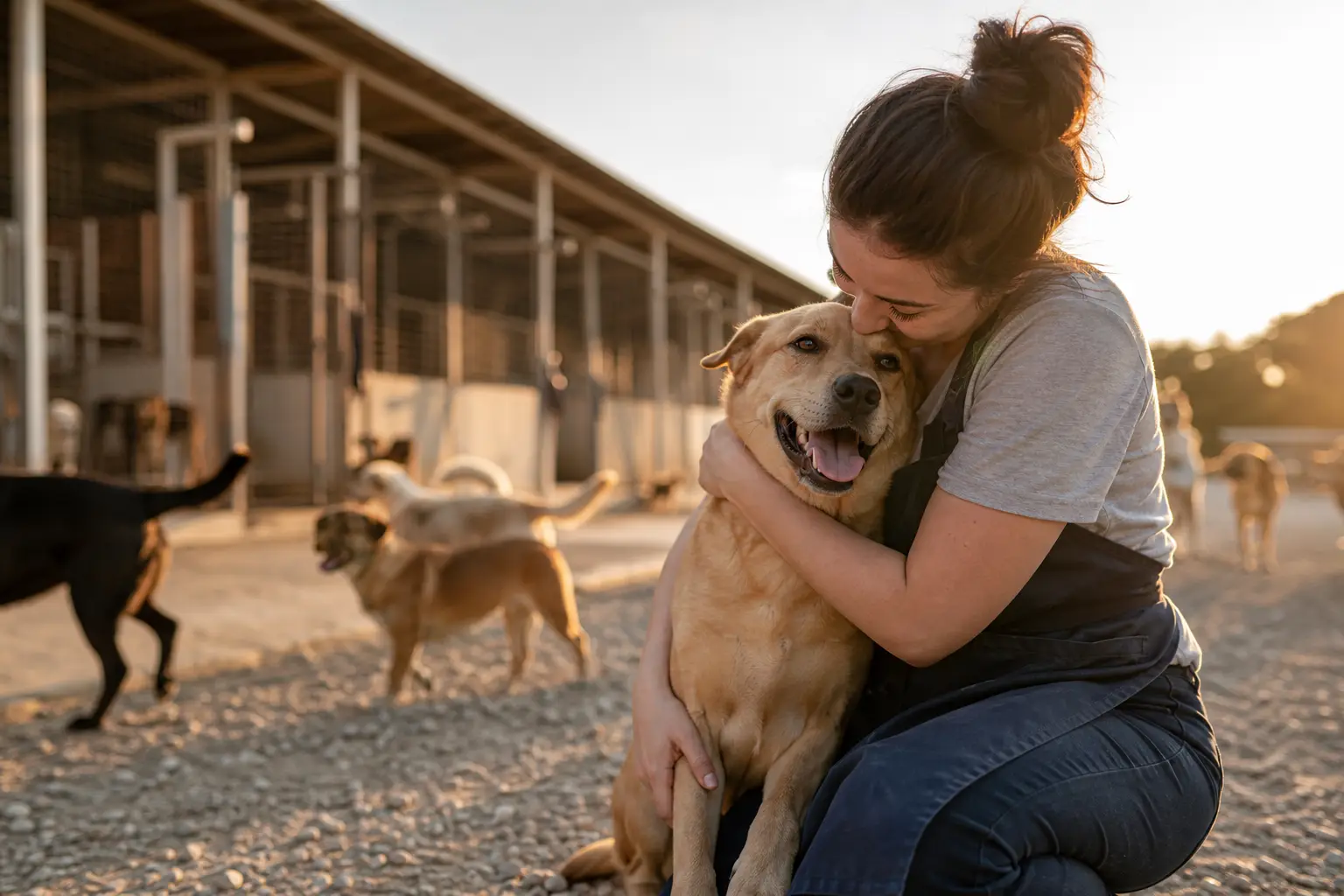

Understanding Trauma Responses in Rescued Animals
A dog cowering in the corner won’t make eye contact. A cat flinches at every sudden movement, even a gentle hand. A rabbit freezes completely at the sound of footsteps. These aren’t personality quirks or random behaviors—they’re trauma responses, and they’re far more common in rescue operations than most people realize.
When abused animals arrive at your facility, they don’t leave their past behind. Trauma doesn’t work that way. It rewires their nervous systems, changes how they perceive safety, and fundamentally alters their ability to trust.
Understanding these responses isn’t just compassionate—it’s essential to your rescue’s success. Without this knowledge, well-meaning staff can accidentally trigger panic, worsen behavioral issues, and delay adoptions that could transform an animal’s life.
October brings its own pressures to rescue operations. Seasonal intake surges often include animals from neglect and abuse situations. Your team needs to recognize trauma signals, understand the science behind them, and respond with precision rather than assumption. That’s what trauma-informed care is really about: meeting animals where they actually are, not where we wish they’d be.
Recognizing common behavioral indicators of past abuse
Trauma manifests differently across individual animals, but certain behavioral patterns appear consistently in abused rescues. A dog that refuses to enter specific rooms or avoids certain staff members may be reacting to sensory or spatial associations with their abuse. Some animals display what’s called “learned helplessness”—they stop trying to avoid pain because they’ve learned that escape isn’t possible. You’ll see this in animals that don’t resist handling even when clearly uncomfortable, almost like they’ve given up.
Other indicators include excessive startle responses, resource guarding (protecting food or toys aggressively), destructive behavior during specific times or triggers, self-soothing repetitive behaviors like spinning or over-grooming, and avoidance of particular people based on appearance, voice tone, or mannerisms. Some abused animals become hypervigilant—constantly scanning their environment, tracking every movement, unable to truly relax. Cats may hide for extended periods, refusing to emerge even for food. Smaller species like rabbits or guinea pigs often show freezing responses that can be mistaken for calm acceptance.
The critical insight: these aren’t behavioral problems to punish. They’re survival mechanisms. An animal displaying these signs has learned these responses kept them alive during dangerous circumstances. Recognizing this distinction changes how your entire team approaches rehabilitation.
How trauma affects the nervous system in dogs, cats, and other species
Trauma creates lasting changes in the brain’s threat detection system. In abused animals, the amygdala (fear center) becomes hyperactive while the prefrontal cortex (rational thinking and impulse control) becomes underactive. This isn’t something a few weeks of good care automatically reverses. The nervous system literally rewires itself around threat perception.
When an animal experiences repeated abuse, their sympathetic nervous system (fight, flight, or freeze response) becomes stuck in overdrive. This means their body stays in a state of perceived danger even when they’re physically safe. A dog’s cortisol levels remain elevated.
Their heart rate stays higher. They sleep poorly because their nervous system never fully powers down. For cats, this often manifests as extreme vigilance or complete shutdown.
Smaller animals like rabbits may develop conditions like gastrointestinal stasis from chronic stress.
Different species process trauma through their species-specific survival strategies. Prey animals tend toward freezing or hiding. Predator species might display fight responses.
Understanding your rescue animals’ biological wiring helps your team respond appropriately. An animal that can’t regulate their nervous system can’t learn. They can’t form trust.
Behavior modification becomes impossible until their physiology shifts first.
Distinguishing between fear-based and aggression-based trauma responses
Here’s where many rescues make critical mistakes: treating fear-based trauma and aggression-based trauma the same way produces opposite results. Fear-based responses typically mean the animal is trying to escape perceived danger. An aggressive response from a traumatized animal is usually defensive—they’re attempting to prevent further harm.
A fearful dog snaps because they believe they’re in immediate danger and see no escape route. An aggressive dog from an abuse background might be guarding their body from repeated punishment. These require different intervention strategies.
Fear-based animals need safety, distance, and low-pressure environments. Aggression-based responses often need controlled exposure to rebuild trust that humans won’t hurt them. Misidentifying which type you’re dealing with can damage both the animal’s progress and your staff’s safety.
The role of environmental triggers in activating trauma behaviors
Triggers are specific stimuli that reactivate trauma responses. They can be obvious (raised voices mimicking an abuser’s tone) or incredibly subtle (the smell of a particular cleaning product, the sound of a specific gate closing, a person’s body posture). When using behavioral rehabilitation approaches, identifying and managing triggers becomes your primary tool.
A dog beaten with a broom might panic at the sight of any stick-like object. A cat abused during transport may react violently to carriers for months. An animal punished during feeding could guard food aggressively or refuse to eat when watched.
Your facility’s environment—noise levels, lighting, routines, even staff uniforms—can trigger or calm trauma responses. This is why thoughtful facility design and consistent protocols matter enormously.
October is when many shelters face resource constraints during intake surges. Understanding triggers means your team can implement low-cost environmental modifications that significantly improve outcomes. That’s trauma-informed care in practice: using knowledge instead of just pouring resources at the problem.
Building Trust and Safety in Your Rescue Facility
Designing physical spaces that promote calm and security
The moment an abused animal enters your facility, its nervous system is already in overdrive. The physical environment you’ve built either helps calm that response or amplifies the trauma. This isn’t about aesthetics. It’s about neurobiology.
Start with containment zones that give animals control over their space. Smaller rooms or sectioned areas work better than open kennels where frightened animals feel exposed on all sides. A dog that’s been abused often needs visual barriers, quiet corners, and the ability to retreat from human interaction when overwhelmed. Raised beds, covered crate spaces, or hidey-holes allow them to self-regulate without forcing them into confrontation.
Lighting matters far more than most rescues realize. Harsh fluorescent overhead lights trigger anxiety in trauma survivors. Soft, diffused lighting creates an environment where animals can breathe.
Similarly, minimize echo and noise. Hard concrete and metal surfaces bounce sound around, creating a constant barrage of stimulation. Add sound dampening materials, soft bedding, and rubber flooring where possible.
Even in tight budgets, these changes save money long-term by reducing stress-related behavioral issues and medical problems.
Color psychology applies to animals too. Cool tones like soft blues and greens have calming effects, while reds and bright yellows can increase agitation. Paint strategically in intake areas and recovery spaces.
Temperature control is equally critical. Abused animals often struggle with body regulation after trauma. Maintain consistent, comfortable temperatures across the facility.
Drafty areas, excessive heat, or cold spaces add another layer of stress to already fragile animals.
Establishing predictable routines to reduce anxiety
Trauma survivors need predictability like they need food and water. When an animal knows that feeding happens at 7 a.m., cleaning at 9 a.m., and quiet time at 2 p.m., their brain gradually stops treating every moment as a threat. This predictability is foundational to recovery.
Create and post daily schedules visible to all staff and volunteers. Include specific times for feeding, cleaning, medical checks, enrichment activities, and rest periods. Stick to these schedules religiously. When an animal can anticipate what comes next, its cortisol levels drop. The hypervigilance that defines trauma begins to ease.
Consistency extends to handling protocols too. If one person feeds a dog gently and another rushes through the process, the animal relearns distrust daily. Training all team members to follow the same gentle, predictable approach prevents that whiplash effect. This is where communication between staff becomes critical. When you’re managing limited resources, standardized routines become your most powerful tool for consistency.
Document each animal’s preferences and triggers as they emerge. Some dogs need morning feeding before handling; others need to decompress for two hours after intake. These individual adjustments, built into your routine, show animals that their boundaries matter. That’s healing in action.
Creating low-stress handling protocols for staff and volunteers
How humans interact with traumatized animals directly determines recovery speed. The gentleness you’ve designed into your physical space means nothing if staff rush animals or use force during handling.
Develop written low-stress handling protocols for every routine task: leashing, crate entry, medical examinations, bathing, and grooming. These should include specific techniques like slow movements, avoidance of direct eye contact initially, and allowing the animal to initiate contact when possible. Some rescues use treats and positive reinforcement exclusively, never forcing compliance through pressure.
Medical staff face unique challenges. A traumatized dog often resists necessary examinations, which can be dangerous for both animal and handler. Low-stress protocols here might include sedation for initial exams, restraint-free handling techniques, or breaking exams into smaller sessions over multiple days.
Yes, this requires more time. But rushing medical care on a frightened animal causes retraumatization that sets recovery back weeks.
Create a “do not attempt” list for animals showing extreme distress. Sometimes the kindest action is waiting another day rather than forcing an interaction that reinforces fear. Your team needs permission to make that call without guilt. Building these safeguards into your culture prevents the burnout that comes from feeling trapped between animal welfare and operational pressure. When you’re supporting sustainable rescue operations, protecting your staff’s wellbeing protects the animals.
Managing sensory environments for sensitive animals
Abused animals often experience sensory sensitivity that borders on painful. Loud noises, certain smells, or unexpected touches can trigger full panic responses. Managing the sensory environment is as essential as medical care.
Create quiet zones separate from high-traffic areas. Some facilities use designated “decompression rooms” where newly rescued animals spend their first 48 hours with minimal stimulation. No loud volunteers, no cage-to-cage barking triggers, no overwhelming sensory input.
Control olfactory input too. Clean bedding regularly. Remove strong cleaning chemicals. Some rescues use pheromone diffusers designed for dogs and cats to create chemical calmness. Essential oils, conversely, can overwhelm sensitive animals and should be avoided.
Monitor sensory exposure as animals recover. A dog that initially needed complete quiet might gradually tolerate normal facility sounds after weeks of stability. Track this progress and adjust placement accordingly. Sensitivity isn’t permanent. With proper environmental management and time, most traumatized animals regain their ability to handle normal stimulation.
Training Staff and Volunteers in Trauma-Informed Practices
Developing certification programs for compassionate animal care
Your staff and volunteers are your rescue’s backbone, but not everyone arrives with trauma-informed knowledge. Building a formal certification program signals to your team that this approach matters and gives them structured pathways to develop real competency.
Start with a foundational curriculum covering how trauma manifests in abused animals: the freezing response, the hypervigilance, the aggression that isn’t malice but survival. Your team needs to recognize these patterns instantly so they can respond with patience instead of frustration. Pair theory with hands-on scenarios. Role-playing exercises where staff practice approaching a fearful dog or a hissing cat build muscle memory for those critical first interactions.
Consider tiering your certification. Level One covers basics: trauma recognition and initial assessment. Level Two digs into intervention techniques and behavioral de-escalation.
Level Three targets leadership roles, preparing team members to mentor others and guide decision-making during crisis moments. Each tier should include observation hours with experienced caregivers, written assessments, and demonstrated competency before advancement.
October’s autumn intake surge makes this especially relevant. As rescues like those working with september shelters transition into fall operations, having certified staff prevents re-traumatization during high-volume periods. Your team moves faster, handles animals with greater confidence, and reduces the mistakes that cost time and emotional energy.
Teaching de-escalation techniques for behavioral challenges
An abused animal in fear can lash out. Without proper de-escalation training, minor incidents become serious injuries, and frightened animals become labeled as “aggressive” when they’re actually terrified. Your team needs tactical tools.
Teach body language reading first. Soft eyes, relaxed posture, slow movements, and low-pitched voices calm anxious animals far more effectively than force ever will. Show staff how to recognize the early warning signs: ear position shifts, stiff gait, whale eye, tail tucking. When your team catches these signals early, they can create space and redirect before escalation occurs.
Practice controlled exposure in low-stakes environments. Set up training scenarios where staff work with less reactive animals first, applying pressure gradually. Breathing techniques matter here too. Staff members who remain calm transmit that calm to animals. Teach box breathing (four counts in, hold four, out four, hold four) as a standard tool before entering high-stress situations.
The goal isn’t perfect control but respectful communication. Sometimes that means letting an animal have their space rather than forcing interaction. Your team should feel empowered to say “not yet” and try again tomorrow, understanding that patience actually accelerates healing.
Building empathy and preventing burnout in rescue teams
Compassion fatigue is real, and it spreads fast. Your staff witness suffering daily. Without intentional support structures, even the most dedicated advocates burn out by year two.
Create regular reflection sessions where team members process difficult cases without judgment. When a rescue animal doesn’t survive, or when you have to make impossible medical decisions, your team needs space to grieve. Acknowledge their emotional labor explicitly. You’re not just asking them to feed and medicate animals; you’re asking them to absorb trauma and transform it into healing.
Rotate roles to prevent monotony and secondary trauma. Someone handling intake for six months straight will emotionally exhaust faster than someone alternating between intake, enrichment, and discharge prep. Cross-training also builds broader skill sets and creates coverage flexibility during sustainable rescue operations.
Celebrate wins publicly and frequently. A dog moving from defensive to playful. A cat accepting touch. These incremental victories matter enormously to morale. Share success stories with your team. Let them see their impact reflected in outcomes.
Creating peer support systems within your organization
Burnout thrives in isolation. Peer support systems create accountability and connection that formal management alone cannot provide.
Establish buddy partnerships where experienced staff mentor newer volunteers. This isn’t just knowledge transfer; it’s normalization of struggles and solutions. A newer team member struggling with a particular animal learns from a peer who has already navigated similar challenges.
Monthly team meetings focused specifically on emotional wellness (separate from operational updates) create safe spaces for vulnerability. Staff members might discuss what triggered them this month, what coping strategies helped, what support they need next. This routine normalizes mental health conversations and prevents festering resentment.
Consider implementing a peer recognition program where staff nominate each other for exemplary trauma-informed care. Recognition from peers carries different weight than manager praise and strengthens team cohesion.
Connect your team to broader community rescue networks. When your advocates know others fighting the same battles across other rescues, they feel less isolated and gain fresh perspectives on recurring challenges.
Medical and Behavioral Assessment Protocols
Conducting thorough intake evaluations without re-traumatizing animals
The moment an abused animal arrives at your rescue, every interaction matters. A poorly executed intake process can compound existing trauma, making recovery harder and longer. The key is gathering essential information while minimizing stress and avoiding triggers that could send the animal back into defensive or shut-down mode.
Start with observation before hands-on assessment. Watch how the animal moves through space, their body language, ear position, tail carriage, and how they respond to unfamiliar sounds or movements. Document these baseline behaviors before you touch them.
Many rescues rush this step, but trauma-informed intake means prioritizing emotional safety over speed. Ask yourself: Is this animal ready for a full physical exam today, or do they need time in a quiet space first?
When you do conduct hands-on evaluation, use slow movements and speak in calm, low tones. Abused animals often have heightened startle responses. Sudden touches or loud voices can trigger fear aggression or complete shutdown.
Introduce each touch gradually, starting with less sensitive areas (shoulders, back) before moving to the head, paws, or abdomen. If an animal shows signs of fear or aggression, pause and return later rather than forcing the evaluation. This teaches them that your rescue is a safe place where their boundaries are respected.
Create a structured intake form that includes behavioral observations, not just medical history. Note how the animal responds to eye contact, handling, food, and other animals. These observations form your baseline for tracking recovery progress and inform decisions about housing, handling protocols, and when to bring in specialized behavior support. Consistency in intake documentation also helps your entire team understand each animal’s unique needs and history.
Collaborating with veterinarians trained in trauma responses
Not all veterinarians understand the behavioral and emotional dimensions of treating abused animals. Finding a vet who grasps trauma-informed medicine is essential to your animal’s recovery. These practitioners recognize that pain from abuse isn’t just physical, and that a frightened animal in a vet clinic needs different handling than a healthy pet coming in for routine care.
Trauma-informed vets minimize restraint, use minimal handling techniques, and work at the animal’s pace. They understand why a dog flinches at the stethoscope or why a cat won’t allow abdominal palpation without escalating fear responses. They also recognize that some animals genuinely cannot tolerate certain procedures without sedation, and they’re comfortable providing it when necessary to prevent re-traumatization.
When collaborating with your veterinary partner, communicate the animal’s history and behavioral triggers upfront. Provide detailed intake notes about what handling or sounds trigger the strongest responses. A vet familiar with eye surgery protocols for traumatized animals, for example, understands the additional emotional support these animals require during recovery. Regular check-ins with your vet about behavioral progress also ensure that medical and behavioral rehabilitation stay aligned.
If your rescue works with multiple vets, prioritize building relationships with clinicians who actively engage with your trauma-informed approach. They become part of your extended team and advocate for your animals’ wellbeing beyond the exam room.
Documenting behavioral baselines for long-term progress tracking
Documentation is the foundation of accountability and progress measurement. Without clear baseline records, you can’t accurately track whether an animal is genuinely improving or whether staff are projecting hope onto subtle changes. This matters because it shapes decisions about readiness for adoption and alerts you when an animal needs additional intervention.
Create a simple behavioral tracking system that records observations weekly or bi-weekly using consistent criteria. Assess: response to handling, interaction with other animals, food motivation, reactivity to sounds, body language during routine care, and willingness to engage with enrichment. Use a scale (1-5) or descriptive terms rather than subjective language. “Improved” means nothing; “no longer flinches when touched on the head” is measurable.
Your tracking system should follow individual animals from intake through adoption. Real recovery cases like bella’s rehabilitation journey demonstrate how documented progress over weeks and months tells a powerful story. Prospective adopters and your team both need to see evidence that the animal is actually healing.
Store these records securely and review them monthly with your entire care team. This practice prevents burnout by showing staff that their efforts create measurable change. It also identifies animals who aren’t progressing and need professional behavior modification services sooner rather than later.
Identifying when professional behavior modification is needed
Not every behavioral issue can be resolved through time and a supportive environment. Recognizing when professional behavior modification is necessary prevents injuries, accelerates recovery, and improves adoption outcomes. Some animals arrive with ingrained trauma responses that require specialized intervention beyond what your staff can provide.
Red flags include: escalating aggression despite consistent handling, inability to eat or drink in the facility, self-injury behaviors, or complete shutdown lasting more than two weeks. Animals displaying these signs need assessment from a certified animal behaviorist or trainer experienced with trauma cases. This isn’t a failure of your rescue, it’s a recognition that complex cases need expert support.
Behavior modification funding is often overlooked when planning emergency animal response budgets. Yet emergency medical care for animals with severe behavioral trauma, just as it is for physical injuries. Professional intervention prevents prolonged suffering and reduces the risk of adoption breakdown.
Document your observation of concerning behaviors, track triggers and responses, and consult with your veterinary partner about referrals to qualified behaviorists. Quality documentation supports these referrals and ensures continuity of care throughout the process.
Supporting Recovery and Rehabilitation
Using gradual exposure and counterconditioning techniques
Recovery from abuse doesn’t happen overnight, and pushing a traumatized animal too fast is counterproductive. Gradual exposure works by carefully introducing the animal to situations, people, or stimuli that triggered fear or aggression during their trauma. The key is moving at the animal’s pace, not yours.
Start with low-stress environments. A dog that was beaten may flinch at raised hands or sudden movements. Instead of forcing interaction, allow them to observe safe human behavior from a distance.
Counterconditioning pairs previously fearful stimuli with positive experiences. When that same dog sees a raised hand, it becomes associated with treats, gentle touches, or play rather than pain. This rewiring takes weeks, sometimes months, but it’s foundational to trauma-informed recovery.
Your staff should document every session carefully. Note what triggered anxiety, how the animal responded, and what intervention worked. This data informs the next session and prevents volunteers from accidentally reinforcing fearful behaviors. Consistency across your entire team prevents mixed messages that confuse healing animals and slow progress.
Integrating enrichment activities into healing timelines
Enrichment isn’t a luxury for abused animals in recovery. It’s therapeutic. Animals that have experienced neglect or abuse often lack normal social development and sensory experiences. Enrichment activities rebuild confidence, redirect trauma responses, and create positive neural pathways that support long-term healing.
Think beyond standard toys. Puzzle feeders engage the brain. Sensory bins with safe materials (sand, water, crinkled paper) allow animals to explore at their own pace. Social play with carefully matched companion animals helps rebuild trust. Scent work taps into natural instincts and provides mental stimulation that prevents rumination on past trauma.
Timing matters enormously. A newly rescued dog may not be ready for group play sessions or outdoor exploration. Start with quiet enrichment in secure spaces, then gradually introduce more stimulating activities as confidence builds. This mirrors human trauma recovery, where pacing prevents re-traumatization.
Your nonprofit may struggle to fund enrichment programs if budgets are tight, but recognize that proper healing prevents behavioral complications later. Animals enriched during recovery adapt faster to adoptive homes and rarely return. That’s measurable cost-effectiveness that justifies investment in quality enrichment during the rehabilitation phase.
Monitoring progress and adjusting care plans as animals heal
Trauma-informed care requires flexible protocols. Standard rescue timelines don’t apply to abused animals. Some recover in weeks. Others need six months or longer. Your assessment team should establish baseline behavioral metrics at intake, then track measurable improvements: reduced anxiety around handlers, increased appetite, engagement with enrichment, or willingness to approach people.
Monthly reassessments allow you to identify what’s working and what needs adjustment. If a specific volunteer’s presence calms an anxious animal, keep them assigned. If particular enrichment activities trigger regression, replace them. Build flexibility into your staff schedules so you can match individual animals with the right people and activities.
Document everything. Video recordings capture subtle progress that written notes might miss. Body language shifts, decreased stress vocalizations, or increased play behavior indicate healing. This documentation also protects your organization if questions arise about an animal’s stability before adoption, and it provides adopters with realistic behavior profiles.
When budgets tighten during fall surge periods, rehabilitation timelines compress. This is where emergency animal donations become critical. Adequate funding prevents forcing animals into adoption before they’re ready, which reduces returns and prevents placement failures.
Preparing animals for successful adoptions and transitions
An animal’s first weeks in a permanent home can make or break recovery. Many abused animals regress when removed from the safety of your facility. Thoughtful preparation minimizes that risk and sets adoptions up for success.
Before adoption, expose the animal to scenarios they’ll encounter at home. If potential adopters have children or other pets, arrange supervised visits during recovery. Introduce the animal to different environments, sounds, and handling styles. Create a transition plan that describes what worked at your facility: favorite toys, feeding routines, exercise patterns, and any triggers that still require careful management.
Provide adopters with realistic expectations and ongoing support. Follow up at two weeks, one month, and three months post-adoption. Offer behavioral consultation if the animal struggles. Many adoption returns happen within 30 days when adopters don’t understand the animal’s history or needs. Your investment in preparation prevents those returns and honors the healing work already done.
Some abused animals aren’t adoption candidates. Long-term sanctuary care or foster-to-adopt programs recognize this reality. Forcing unsuitable animals into homes creates unnecessary suffering. Trauma-informed rescue advocates for what each animal actually needs, not what your adoption numbers require. This perspective requires financial stability, which is why securing emergency animal donations protects your ability to make compassionate decisions without financial pressure distorting care quality.
Advocating for Systemic Change in Animal Welfare
Sharing trauma-informed care best practices with other rescues
Your organization doesn’t operate in isolation. When your team develops effective trauma-informed protocols, other rescues in your region are likely facing identical challenges with limited resources and staff knowledge. Sharing what you’ve learned becomes an act of advocacy that multiplies your impact far beyond your own facility’s walls.
Start by documenting your protocols in formats others can actually use. A written guide covering intake assessment, safe handling techniques, and behavioral observation checklists gives neighboring rescues a concrete starting point. Host quarterly peer learning sessions where shelter managers from different organizations discuss real cases, challenges, and solutions. These don’t require elaborate meetings, just experienced staff willing to talk through what works and what doesn’t. Organizations managing emergency response operations especially benefit from this knowledge exchange when crises hit and protocols need rapid implementation across multiple facilities.
Create mentorship partnerships with smaller, under-resourced rescues. Assign one experienced staff member to guide another organization’s team through your trauma-informed framework. This direct relationship accelerates learning and builds the regional capacity everyone needs when abuse cases surge or emergencies demand coordinated response.
Contributing to industry standards and certification requirements
Trauma-informed care shouldn’t exist as isolated best practices at individual rescues. It needs to become an industry standard. Your organization can push this forward by participating in professional networks, contributing to curriculum development, and advocating for certification requirements that demand trauma-informed competency.
Work with associations like the Association of Shelter Veterinarians and professional animal welfare councils to shape training standards. Submit case studies, outcome data, and evidence from your facility’s trauma-informed work. This evidence influences certification bodies when they design requirements for animal welfare professionals. When emergency cat rescue must meet certified standards, they prioritize hiring trained staff and implementing proven protocols.
Advocate for continuing education mandates that specifically address trauma response in animals. If your state or region requires ongoing training for shelter workers, push for trauma-informed care to be part of that requirement. One rescue’s advocacy becomes the industry’s expectation.
Partnering with law enforcement and legal professionals on abuse cases
Abused animals in your care are evidence in criminal cases. Building strong partnerships with law enforcement and prosecutors ensures that trauma-informed documentation supports both the animal’s recovery and the legal process. These partnerships also prevent re-traumatization during investigations and testimony.
Develop written agreements with local law enforcement outlining how animals are handled during investigations, who conducts interviews about the animal’s condition, and how medical records are documented for court proceedings. Train your staff on what constitutes admissible evidence and how behavioral documentation matters legally. When an investigator or prosecutor understands trauma response, they ask questions that don’t further frighten the animal and they recognize that behavioral changes reflect abuse, not permanent personality defects.
Connect prosecutors with resources about sentencing recommendations for animal cruelty. Many legal professionals don’t realize that treatment plans and recovery outcomes matter when courts determine penalties. Showing judges that an abused animal successfully rehabilitated through trauma-informed care strengthens arguments for meaningful consequences.
Educating communities about the long-term impacts of animal abuse
Community understanding drives both prevention and support. Most people don’t grasp that animal abuse creates lasting trauma requiring specialized care. They think rescued animals simply need food, shelter, and adoption. Education changes this perception and builds public support for the resources abuse survivors need.
Launch awareness campaigns during key moments, particularly in September when many rescues face crisis intake surges. Explain how trauma-informed care prevents behavioral crises during adoption, reduces return rates, and helps animals build trust. Share success stories showing the timeline and complexity of recovery. When community members understand that rehabilitation takes weeks or months, not days, they become advocates for emergency animal donations that fund this essential care.
Work with schools, community centers, and youth programs to teach children about recognizing abuse signs and reporting them. Frame this as protecting future animals in your community. Educated young people grow into adults who report cruelty, support legislation, and fund rescues doing this work.
Trauma-informed care for abused animals represents a commitment that extends far beyond individual animals through your doors. When you share your knowledge, influence industry standards, partner with legal systems, and educate your community, you’re building a movement where trauma-informed practice becomes the baseline expectation, not the exception. Your advocacy today shapes how rescues treat traumatized animals tomorrow, preventing burnout in your own team while creating sustainable operations across the entire animal welfare field. This is systemic change in action, and it matters.
Related Posts
- Summer Heat Emergencies: What Shelters Need Most
- Underfunded, Understaffed, Lifesaving: The Economics of Small Shelters
- The True Cost of Emergency Veterinary Care (And Why Speed Matters)
- When Adoption Isn’t Enough: Why Emergency Medical Care Is Critical
- The Ripple Effect: How One Emergency Donation Saves Multiple Animals
- Building Resilience: Why Shelters Need Emergency Reserves (And How You Help)
- The Math of Mercy: Breaking Down Where Your Donation Goes
- Emergency or Opportunity? How Crises Become Turning Points for Animal Welfare
- September Shelters in Crisis Mode What Happens When Summer Rescues Overwhelm Fall Resources
- Behavioral Rehabilitation What Rescue Animals Need Beyond Food and Shelter
- Community Rescue Networks That Actually Work Building Advocacy Coalitions That Save Lives
- Sustainable Rescue Operations How Smart Advocacy Prevents Burnout and Saves More Animals