
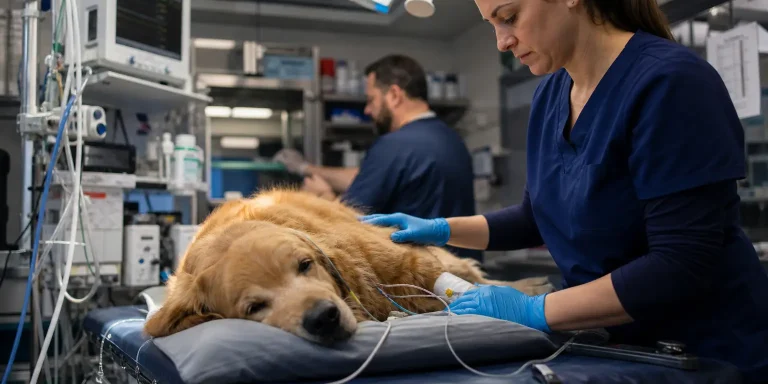
Understanding the Financial Impact of After-Hours Veterinary Care
It’s 2 AM on a Saturday, and your dog suddenly collapses. You rush to the nearest emergency veterinary clinic with your heart in your throat. Within hours, you’re staring at a bill that makes you catch your breath. A routine checkup at your regular vet might cost $150 to $300. But that same night, the emergency clinic just charged you $1,500 for diagnostics, treatment, and stabilization.
This isn’t price gouging. It’s the real cost of keeping animals alive when the stakes are highest.
Pet owners often don’t realize how dramatically expenses shift when their animal needs urgent care. The financial impact of after-hours veterinary services can shock families already stressed about their pet’s health. Understanding why these costs exist, how they’re calculated, and what drives price variations helps you make informed decisions during a crisis. When you’re facing a medical emergency with your animal, knowledge becomes part of your survival toolkit.
Why emergency clinics charge premium rates compared to routine care
Emergency veterinary clinics operate under completely different constraints than daytime practices. Your regular vet works predictable hours with scheduled appointments, established patient relationships, and controlled workflows. Emergency clinics? They’re staffed 24/7, treating unknown animals with unpredictable conditions, from stabilizing a hit-by-car victim to managing a sudden seizure.
The core reason for premium pricing is operational necessity. An emergency clinic must maintain full surgical capabilities, diagnostic equipment, and trained staff standing by at all hours. Whether they treat one animal or ten during a shift, those lights stay on.
Those veterinarians and technicians still draw salaries. Those supplies still need purchasing. A routine practice can close at 6 PM and reduce overhead.
An emergency clinic cannot.
There’s also the urgency factor. When you need emergency care, you need it now. You can’t shop around, schedule three weeks ahead, or choose a cheaper alternative.
Emergency medicine is non-negotiable, non-negotiable care. This inelasticity of demand means clinics price accordingly. Beyond operational reality, emergency care involves higher-risk patients, more complex cases, and greater liability exposure.
A pet arriving with internal bleeding requires immediate intervention with uncertain outcomes. The investment in rapid response, experienced staff, and round-the-clock readiness justifies the cost structure.
Breaking down the cost components: facility, staffing, and equipment
When that $1,500 bill arrives, it’s not one number. It’s multiple layers, each reflecting genuine expenses.
Facility costs cover the physical infrastructure. Emergency clinics maintain surgical suites equipped to advanced standards, treatment rooms with isolation capabilities, monitoring stations, and pharmacy areas. Rent, utilities, and property insurance for 24/7 operations exceed daytime clinic costs significantly. Building codes for emergency veterinary facilities often require enhanced systems for oxygen delivery, backup power, and hazardous waste management. These aren’t optional expenses; they’re compliance requirements.
Staffing represents the largest cost driver. Emergency clinics employ veterinarians with specialized training in emergency medicine, along with veterinary technicians, support staff, and administrative personnel working overnight and weekend shifts. These staff members receive shift differentials (typically 15-30% premium pay for after-hours work). A single emergency vet visit involves the veterinarian, a technician assisting with restraint and monitoring, and often a second technician managing pharmacy or lab work. That’s three experienced professionals focused on one animal, often for extended periods.
Equipment and diagnostics include ultrasound machines, digital radiography systems, blood analyzers, and advanced monitoring equipment. Unlike routine practices that use these machines throughout the day, emergency clinics must maintain redundant systems and immediate availability. Blood work processing, radiographic imaging, and ultrasound scans all carry built-in costs, but emergency clinics add a markup reflecting the premium technology required for rapid diagnosis.
How geographic location and time of day affect pricing
Emergency vet costs vary dramatically based on where you live. A major metropolitan area like Denver or Phoenix has multiple emergency clinics competing, which can moderate prices slightly. Rural areas with only one emergency facility charge significantly more because demand vastly exceeds supply. There’s nowhere else to go.
Time of day also impacts pricing. A cat arriving at 7 PM on a Friday faces different costs than one arriving at 3 AM on a Monday. Early evening emergencies often overlap with regular clinic hours, allowing some facilities to use standard staffing.
Late night and early morning emergencies require full after-hours crews, pushing costs higher. Weekends and holidays see additional premiums because staff compensation increases and demand concentrates into fewer available appointment slots.
Understanding why emergency animal donations matter becomes clearer when you grasp these cost realities. Families facing unexpected veterinary emergencies often lack the savings to cover these expenses immediately, which is where immediate financial support becomes critical for saving lives.
Common Emergency Scenarios and Their Associated Costs
Trauma and acute injuries: what diagnostic testing reveals about expenses
A dog hit by a car. A cat falling from a balcony. A pet struck by another animal. These moments happen in seconds, but the financial impact stretches far longer than anyone expects.
When trauma arrives through the emergency room doors, the first costs hit immediately. X-rays, ultrasounds, and bloodwork form the foundation of any trauma assessment. A single radiograph set runs $150 to $300.
Add abdominal ultrasound to rule out internal bleeding, and you’re looking at another $300 to $500. The veterinarian needs to know what’s broken, what’s bleeding, and what’s still functioning. That information costs money before any treatment even begins.
But here’s where it gets expensive: complications from delayed diagnosis. A fracture might seem stable initially, but without proper imaging, a hairline break can become a complete fracture. Soft tissue damage gets missed. Internal bleeding isn’t caught until shock sets in. The animals we’ve supported at emergency response funding often arrived with diagnostic costs already stacking up because initial attempts at home care delayed proper imaging.
Hospitalization, fluid therapy, pain management, and monitoring during the diagnostic phase add $500 to $1,500 per day. Surgery, if needed, starts at $2,000 and climbs rapidly depending on the injury severity. A simple fracture repair costs differently than reconstructive surgery for a shattered limb.
Toxin ingestion and poisoning: why rapid treatment saves money long-term
Antifreeze. Chocolate. Xylitol. Rodent poison. Medications. The list of toxic substances pets encounter is staggering, and each one triggers a different emergency protocol with wildly different price tags.
The moment toxin exposure is suspected, emergency treatment begins with decontamination. Activated charcoal administration, gastric lavage (stomach pumping), or inducing vomiting all happen in the first hours. These interventions cost $300 to $800 and must happen quickly to be effective. Miss that window, and the toxin absorbs into the bloodstream.
Then comes the waiting period. Blood tests monitor organ function, specifically liver and kidney markers. A single chemistry panel costs $150 to $300. Repeat panels every 12 to 24 hours during hospitalization add up fast. Some toxins require multiple rounds of testing over several days.
The real expense emerges if organs begin failing. Kidney failure from antifreeze poisoning or liver damage from acetaminophen toxicity demands intensive care. IV fluids, dialysis in severe cases, hepatic support medications, and round-the-clock monitoring can easily exceed $5,000 to $10,000 over a treatment course. When we’ve documented cases through our emergency response protocols, toxin cases involving organ support consistently required the longest hospitalization and highest total costs. Speed of treatment literally prevents organ damage that would otherwise demand far costlier intervention.
Respiratory distress and cardiac emergencies: ICU-level care requirements
A pet gasping for breath. A heart beating irregularly or stopping altogether. These emergencies demand immediate ICU-level care, and ICU costs represent the highest tier of veterinary medicine.
Oxygen therapy, continuous cardiac monitoring, IV medications, and mechanical ventilation (if needed) form the baseline. Daily ICU hospitalization runs $1,500 to $3,000 or more depending on the facility and monitoring intensity. Echocardiograms to assess cardiac function cost $400 to $800. Chest radiographs, bloodwork, and arterial blood gas analysis add another $500 to $1,200 daily.
Medications for cardiac support and respiratory function are expensive. Inotropic drugs, diuretics, and respiratory support agents cost $200 to $600 daily. A pet requiring even three days of ICU care easily reaches $5,000 to $10,000 before any underlying condition is surgically addressed.
The stakes here are different because we’re racing against organ failure. Every hour without proper oxygenation or cardiac support risks brain damage. Every hour of inadequate perfusion damages the kidneys and liver. The cost isn’t negotiable when life hangs in the balance.
Urinary blockages and gastrointestinal obstructions: surgery vs. conservative management
A blocked cat unable to urinate. A dog with a foreign object lodged in the intestines. Both scenarios present a choice between conservative management and surgery, and that choice carries dramatically different financial consequences.
Conservative management of a urinary blockage involves catheterization and hospitalization. Placing a urinary catheter, flushing the bladder, and providing IV fluids costs $1,500 to $2,500 for the initial procedure and first 24 hours. Continued hospitalization for monitoring runs $500 to $1,000 daily.
This approach works sometimes. It also fails sometimes, and when it does, emergency surgery becomes necessary anyway. Now the owner faces both conservative treatment costs and surgical costs.
Surgery for obstructions bypasses the uncertainty. Enterotomy (opening the intestine to remove the foreign object) costs $2,500 to $4,500. Urinary surgery addressing recurrent blockages ranges from $3,000 to $6,000. Add pre-surgical diagnostics, anesthesia, post-operative pain management, and antibiotics, and surgical cases easily exceed $5,000 to $8,000.
The financial paradox is real: sometimes the more expensive option upfront saves money overall. Cases like those treated demonstrate that decisive surgical intervention, though costly initially, often prevents the cascade of complications that extend hospitalization and inflate final bills.
Why Speed of Care Directly Influences Final Treatment Costs
Early intervention and how it prevents cascade complications
When a pet experiences an emergency, the clock starts ticking in ways most owners don’t fully appreciate. That first hour, those first few hours, they fundamentally shape whether treatment costs $2,000 or $15,000. Early intervention isn’t just about making your pet feel better faster, it’s about stopping a single problem from exploding into multiple simultaneous crises.
Consider a dog hit by a car. Immediate veterinary evaluation catches internal bleeding before it becomes life-threatening shock. The vet might identify a fractured rib early, manage pain immediately, and prevent pneumonia from developing.
Wait six hours, and that same rib fracture could have punctured a lung. Now you’re not treating one injury, you’re treating two. The cost multiplies.
The complexity multiplies. The risk of permanent damage multiplies.
This cascade effect applies across virtually every emergency scenario. A dog with signs of bloat (gastric dilatation-volvulus) needs surgery within hours, not days. Delay that intervention, and the stomach tissue begins to die.
Dead tissue requires more extensive surgery, longer recovery, higher antibiotic costs, and significantly increased mortality risk. What started as a $3,000-$5,000 emergency becomes a $10,000+ crisis with substantially worse outcomes.
Understanding why we focus means recognizing that prevention of cascade complications is prevention of exponential cost increases.
The difference between stabilization and intensive treatment timelines
Here’s where many pet owners get confused about emergency vet expenses. There’s stabilization, and there’s intensive treatment. They sound similar. They’re not remotely the same thing financially or medically.
Stabilization happens fast. An emergency vet stabilizes your pet to keep them alive and prevent immediate deterioration. This might include IV fluids, oxygen, pain medication, and basic diagnostics. Stabilization often takes 2-4 hours and costs significantly less than what comes next.
Intensive treatment is the days or weeks that follow. This is where your pet actually heals. This involves surgery, extended monitoring, specialized medications, repeated imaging, and constant nursing care.
A pet stabilized for a toxin ingestion might spend 3-5 days hospitalized receiving activated charcoal treatments, IV supportive care, and monitoring for organ damage. That’s intensive treatment territory, and costs reflect the complexity and duration.
Speed matters here because early stabilization prevents the need for more aggressive intensive treatment protocols. A pet brought in immediately after toxin ingestion can be managed with less invasive approaches. A pet brought in 12 hours later might need dialysis or blood transfusions. The timeline between emergency and arrival at the clinic directly determines which treatment protocol your vet must use, and those protocols have vastly different price tags.
How delayed care increases hospitalization duration and medication needs
Hospitalization costs compound daily. A three-day stay costs roughly three times what a one-day stay costs. Medication needs scale similarly. What seems like a small delay in seeking care often extends hospital time by days or weeks.
Take a urinary obstruction in a cat. This is life-threatening within 24-48 hours. Early treatment means your cat gets catheterized, stays hospitalized for 2-3 days for monitoring and medication, and goes home.
Cost is manageable, though not cheap. Your cat waits 48 hours before you seek help? Now the bladder wall has started to rupture.
Now your vet needs to perform surgery, not just catheterization. Hospitalization extends to 5-7 days. Additional medications for infection prevention, pain management, and kidney support are needed.
The final bill might be double or triple the early-intervention scenario.
Similar patterns emerge with infected wounds, pneumonia, and fractures. Every day of delay means more tissue damage, more infection risk, more medication requirements. A small laceration treated immediately might need cleaning and sutures, costing $500-$800.
The same laceration left for a week develops severe infection, requires surgical debridement, extended antibiotic therapy, and twice the veterinary time. Now you’re looking at $2,000+.
Real outcomes: recoverable conditions that become life-threatening with wait-and-see approaches
Wait-and-see approaches have a seductive appeal. Maybe your pet will improve on their own. Maybe you can avoid expensive vet bills. This logic fails spectacularly in emergency medicine because many conditions get worse exponentially, not linearly.
Eye injuries are perfect examples of this principle. A corneal ulcer caught early responds to topical medication and protective measures within days or weeks. The same ulcer ignored for even a few days can perforate the cornea, leading to infection, vision loss, and potentially requiring surgical intervention like a graft or even enucleation. Cases like the puppy featured in help save illustrate how quickly eye emergencies escalate from treatable to catastrophic.
Bloat, toxin ingestion, and organ failure follow identical patterns. In the first few hours, recovery is possible with reasonable intervention. By hour 12, your pet’s chances drop dramatically. By hour 24, you’re looking at survival rates that might be 20-30% even with aggressive care. The cost doesn’t change the outcome at that point. Speed does.
This is precisely why understanding the true cost of emergency veterinary care means understanding that the cheapest option is often the fastest one. Getting your pet to a veterinarian immediately, not tomorrow, not after you’ve tried home remedies, determines whether recovery is possible and what that recovery will cost.
Financial Planning Strategies for Pet Owners
Pet emergency insurance: coverage limits and what they actually protect
Pet insurance can feel like a safety net until you actually need it. The reality is more complicated than most policies make it sound. Most pet emergency insurance plans cover unexpected accidents and illnesses, but the devil lives in those coverage limits and exclusion clauses.
Here’s what matters: a typical accident/illness policy might offer annual coverage between $5,000 and $15,000, with deductibles ranging from $250 to $1,000 per incident. Sounds decent until your dog needs emergency surgery and the bill hits $8,000. After your deductible, you’re looking at co-insurance (usually 10-20%), which means the insurance covers 80-90% of eligible costs. That $8,000 procedure suddenly costs you $1,400 out of pocket even with coverage.
Pre-existing conditions aren’t covered. Breed-specific conditions often have exclusions or waiting periods. Chronic issues that develop later?
Not covered. And here’s the kicker: many policies reimburse based on a predetermined fee schedule, not your actual vet bill. Your emergency clinic charges $2,500 for a procedure, but the insurance company’s fee schedule says that procedure is worth $1,800.
You’re paying the difference.
Before choosing a policy, read what it actually excludes. Ask your veterinarian which conditions are common in your pet’s breed and age. Compare reimbursement structures (percentage-based is usually better than fee-schedule). And understand that emergency insurance specifically excludes routine preventive care, so it won’t help with annual checkups or vaccinations that might prevent emergencies down the road.
Building a dedicated emergency fund versus payment plan options
The most straightforward strategy pet owners overlook is the emergency fund. Not a savings account for vacations. A dedicated fund specifically for veterinary emergencies. Most financial advisors suggest pet owners maintain between $3,000 and $5,000 in readily accessible emergency funds. For multi-pet households, that number doubles or triples.
Why build the fund yourself instead of relying on payment plans? Speed. When your cat is having a breathing crisis at 2 AM, no payment plan helps.
Emergency clinics often require payment upfront or within 24 hours. Having your own fund means you approve treatment without financial negotiation in the moment. You’re making medical decisions based on what your pet needs, not what you can afford right now.
Payment plans exist as a genuine option, but they come with trade-offs. Care Credit, Scratch, and similar veterinary financing companies charge interest rates between 12% and 28% depending on your credit score and repayment term. A $6,000 emergency could cost you $7,200 over time. Some clinics offer in-house payment plans with lower rates, but availability varies wildly.
The hybrid approach works best: maintain a $2,000 to $3,000 emergency fund for immediate expenses, pair it with pet insurance for larger catastrophic costs, and know which payment plan options your preferred clinic accepts before an emergency happens. This combination gives you flexibility without forcing you into high-interest debt when emotions are running highest.
Negotiating costs with clinics and understanding transparent pricing policies
Most pet owners never ask about pricing. That’s partly because in an emergency, asking feels mercenary. But veterinarians expect these conversations. Hospitals that hesitate to discuss costs upfront are red flags for your future care relationship.
Start by asking for an estimate before treatment begins. A legitimate emergency clinic provides written estimates that break down diagnostic costs, procedure fees, anesthesia, medications, and monitoring separately. If a clinic says “the emergency exam is $500 and treatment costs will depend on what we find,” push back. Ask them to call you after diagnostics with options and estimated costs before proceeding.
Transparency varies by region. Some clinics publish their fees online. Others won’t quote prices without evaluating your pet first. When discussing eye surgery costs, ask whether estimates include aftercare and medications or if those are additional. Ask if payment plans are available and what interest rates apply.
Negotiation is possible, especially for larger procedures. If a clinic quotes $8,000 for a surgery and your fund covers $6,000, ask if they offer discounts for upfront payment or if any costs can be deferred. Some clinics reduce fees for rescue animals or uninsured clients. You won’t know unless you ask respectfully.
When to seek second opinions without delaying critical treatment
The tension here is real: you want the best outcome for your pet, but delaying care costs money and harms outcomes. Second opinions make sense for planned procedures. They don’t make sense for acute crises.
If your pet is bleeding, unable to breathe, or unconscious, get treatment immediately. Don’t comparison shop during an emergency. Once your pet is stabilized, you can seek second opinions about ongoing treatment plans. This distinction saves lives and saves money.
For procedures scheduled within 24-48 hours, a second opinion is reasonable if your first clinic supports it. Good clinics don’t feel threatened by second opinions. If a veterinarian becomes defensive about being questioned, that’s telling.
Ask whether your first clinic can transfer records to a second opinion veterinarian. Can they send imaging? Have they already performed diagnostics you won’t need to repeat? A second opinion shouldn’t double your diagnostic costs if the first clinic cooperates.
The Hidden Costs Beyond the Initial Emergency Visit
Follow-up medications, monitoring, and rehabilitation expenses
That $3,000 emergency surgery bill? It’s almost never the final number. What catches most pet owners off guard is the cascade of costs that follow the initial crisis intervention. Follow-up medications alone can stretch into hundreds of dollars, especially when your pet needs pain management, antibiotics, or specialized pharmaceuticals for several weeks.
Consider a dog who needed emergency orthopedic surgery for a fractured leg. The surgery costs $2,500, but then comes the prescription pain medication at $180 for a two-week supply, followed by physical rehabilitation sessions at $75 per visit, twice weekly for six weeks. That’s another $900 right there. Add in recheck radiographs to monitor bone healing (typically $400-600 per visit), and you’re looking at an additional $2,000-2,500 just in post-operative care.
Rehabilitation and monitored recovery are non-negotiable for serious injuries, yet they’re frequently underestimated in pet owner budgets. Cats recovering from urinary blockages need multiple follow-up ultrasounds and urine cultures. Dogs healing from gastric dilatation-volvulus (that life-threatening stomach condition) require weeks of bland diet management and careful activity restriction. These supervised recovery periods exist for a reason: they prevent complications that would send your pet right back into emergency care.
Potential complications and how they escalate total treatment costs
Emergency veterinary care isn’t always a straight path to recovery. Complications emerge in roughly 15-20% of emergency cases, and when they do, they transform a manageable expense into a financial catastrophe.
Take infection as an example. A pet who survives emergency surgery but develops a post-operative infection faces additional hospitalization ($1,500-3,000), new antibiotics ($300-600), and potentially a second surgical intervention ($2,000-5,000) to address the infection site. What started as a single emergency event becomes multiple emergencies stacked on top of each other.
Organ damage represents another hidden escalator. A pet treated for toxin ingestion might survive the initial decontamination and activated charcoal treatment, but liver or kidney complications can emerge days or weeks later. Ongoing blood work, specialized medications, and dietary management transform acute emergency care into chronic disease management with perpetual costs.
Blood clots, anesthetic reactions, medication sensitivities, and organ failure during recovery are all possible. Each complication typically adds $2,000-8,000 in unexpected expenses. This is why emergency response funding becomes so critical for families already stretched thin by the initial emergency bill.
Long-term management needs for chronic conditions revealed during emergency care
Here’s something veterinarians see constantly: emergency visits often reveal underlying chronic conditions that were previously undiagnosed. A pet rushed in for vomiting gets bloodwork done and suddenly you learn your dog has early-stage kidney disease. Now you’re looking at prescription kidney diet food ($60-100 monthly), quarterly bloodwork monitoring ($300-400 per visit), and potentially medications to manage kidney function ($100-200 monthly).
A cat seen for urinary obstruction might be discovered to have diabetes during hospitalization. That’s 10-15 years of insulin injections, regular glucose monitoring, and dietary management adding up to $5,000-10,000 over the pet’s remaining lifetime.
Emergency visits are like opening a door on your pet’s complete health picture. The good news is early detection. The challenging news is the financial commitment it reveals. Owners in states like Arizona, Colorado, Texas, and Washington who face these discoveries often find that resources like arizona dog rescue or similar emergency animal assistance programs provide critical bridges during these transitions to long-term care.
Preventative measures that reduce future emergency frequency
The most cost-effective emergency vet strategy is preventing emergencies altogether. Regular wellness exams catch problems early when they’re cheaper and easier to treat. That $200 annual checkup might prevent a $4,000 emergency hospitalization.
Dental care deserves special mention. Untreated dental disease leads to infections, tooth extractions, and systemic illness. Preventative dental cleanings ($500-1,500) cost far less than emergency dental extractions with anesthesia ($2,000-4,000) plus complications.
Microchipping and proper identification (around $50-70) might seem unrelated to emergency vet costs, but lost pets who end up in shelters often face emergency situations that could have been prevented with quick reunification. Maintaining current vaccines, parasite prevention, and appropriate weight all reduce the likelihood of costly emergency interventions.
For rescue animals especially, establishing preventative baseline care from the start pays dividends in reduced future emergency frequency and costs.
Making Informed Decisions When Cost and Care Intersect
Evaluating treatment options with your veterinarian: quality-of-life considerations
When your pet is in crisis, the instinct is to say yes to everything. But emergency veterinary care often presents multiple pathways forward, and not all of them fit your pet’s life or your financial reality. The most expensive option isn’t always the best one.
Talk openly with your veterinarian about what treatment success actually looks like for your specific animal. A senior dog with multiple comorbidities may not bounce back the same way a young, healthy pet would from the same injury. Some interventions extend life by months; others by hours. Your vet can help you understand the difference, and they won’t judge you for prioritizing comfort over aggressive treatment if that’s what makes sense for your situation.
Ask direct questions about realistic outcomes. What percentage of patients with this condition return to normal function? How long is the recovery period? Will your pet need ongoing medication or specialized care at home? These answers help you make decisions that align with your capacity to provide follow-up care, not just the initial emergency stabilization.
Understanding prognosis estimates and realistic recovery costs
Prognosis estimates aren’t crystal balls, but they’re valuable anchors for your planning. Your veterinarian should be able to tell you not just whether your pet will survive the emergency procedure, but what their functional recovery looks like over weeks and months afterward.
Here’s what’s critical: the initial emergency vet bill is rarely the final cost. If surgery is required, you’re looking at post-operative pain management, antibiotics, restricted activity, follow-up exams, and potentially imaging to confirm healing. A dog that needs emergency leg repair doesn’t simply walk out of the clinic healed. Physical rehabilitation, modified exercise protocols, and monitoring extend the cost timeline significantly.
Request a realistic estimate for the entire recovery arc, not just the emergency intervention. Some cases resolve in two weeks; others require three to six months of supporting care. Knowing this upfront helps you understand whether you can manage the financial commitment through the full recovery period. It also prevents surprise bills when you bring your pet back for the second, third, and fourth follow-up visit that’s actually medically necessary.
Resources for pet owners facing financial hardship during emergencies
Financial hardship during a pet emergency is real, and it’s not a character flaw. Many pet owners face impossible choices between accessing care and paying rent. Acknowledging this reality opens doors to actual solutions.
Several legitimate pathways exist. Some emergency clinics offer payment plans that spread costs over months. Organizations focused on emergency animal funding can bridge gaps when your savings fall short. If you’re in specific regions, resources like colorado emergency cat are designed exactly for moments like this. Don’t assume you’re ineligible; many programs have broader criteria than pet owners realize.
Credit options exist too, though they carry real interest costs. CareCredit and similar veterinary finance products have helped countless people access emergency care when immediate cash wasn’t available. Some local animal rescues or breed-specific organizations provide emergency assistance funds.
Ask your veterinarian what partnerships exist in your area. They often know which resources actually work because they see them activate regularly.
Documentation and advocacy: advocating for your pet’s care needs
During an emergency, emotions run high and information overload is real. Document everything. Get written estimates, treatment plans, and progress notes.
Request copies of imaging, lab work, and surgical reports. This paper trail serves multiple purposes: it helps your regular veterinarian understand what happened if ongoing care is needed, it provides clarity if you need to dispute a bill, and it creates a record if you’re seeking assistance from funding organizations.
Advocate for your pet clearly. If cost is a constraint, say so directly to your veterinarian. They can’t adjust treatment recommendations if they don’t know your actual situation. Ask about stepped interventions: what’s the most critical thing to stabilize immediately, and what can wait 24 or 48 hours? Sometimes this approach brings total costs down while still saving your pet’s life.
Read our story about a small dog to see how advocacy and support intersect. Tiny’s situation illustrates exactly this tension between immediate need and financial reality, and how determined pet owners can navigate it successfully.
The truth is this: making informed decisions when cost and care intersect requires clarity about your values, honest communication with your veterinary team, and willingness to explore resources you might not have known existed. Your pet’s emergency doesn’t have to mean financial ruin, and it shouldn’t force you to choose between their life and your family’s stability. Reach out to emergency animal funding organizations, ask your veterinarian about payment options, and remember that advocating for what your pet needs (within your actual constraints) is the most responsible choice you can make.
Related Posts
- A Small Dog Named Tiny Needs Emergency Help
- Tiny Receives Treatment at Hillcrest Veterinary Hospital
- Tiny Finds Her Forever Home
- Building Corporate Partnerships for Large Scale Animal Emergency Relief Operations
- Emergency Response Protocols When Animal Rescue Donations Are Critically Needed
- Help Save This Brave Little Puppy – Urgent Eye Surgery Needed
- Why We Focus on Emergency Response Funding for Animals in Crisis